Faith: A Psychological Cue or the Wisdom of Humanity?

Do we need faith?
In this age of information overload and rational thinking, the question might seem outdated. Many people instinctively equate “faith” with “superstition,” as if believing in something invisible automatically makes one unscientific or irrational. But is it really that simple?

Faith ≠ Religion

Faith does not necessarily mean religion. Religion is just one form of expressing faith. True faith is more like an internal compass—it guides how we live, how we make decisions, and how we face the uncontrollable parts of life.
For example, some believe in “hard work pays off,” others in “good karma,” or even “fate will sort itself out.” These aren’t religions, but they shape people’s behaviors and life paths.

Religion, in turn, is the systematization and ritualization of faith, passed down through tradition and culture. A well-developed religion often carries deep philosophical thought and social wisdom.

Faith as a Summary of Human Experience

Why do we form faiths?
Because humans are exceptional at recognizing patterns.

Throughout history, we’ve suffered disasters, witnessed moral failures, and also experienced acts of great wisdom and compassion. When certain behaviors are repeatedly proven effective and beneficial, we tend to distill them into belief systems—what we call faiths or religions.

Rules like “do not kill,” “respect others,” or “observe discipline” may seem simple, but they are distilled from thousands of years of collective human experience about how to live well together.

And let’s be honest—resources are limited. Not everyone can access quality education or grasp complex ethical reasoning. For many, a straightforward, unquestionable system of faith is more practical. It allows people to act correctly without needing to understand every nuance behind it.

Good Faith vs. Bad Faith

Faith itself is neutral—what matters is what it leads to.
If a faith encourages kindness, cooperation, and growth, it’s a good faith. If it promotes hatred, extremism, or harm to others, it’s a bad one.

History has seen manipulated faith systems that fueled war, division, and tragedy. But those same examples serve as a warning: without reflection and evolution, faith can become dangerous dogma.

Faith as a Psychological Tool

From another perspective, faith can also be seen as a psychological tool.
Humans are not purely rational—we need support, meaning, and something to hold on to when life gets chaotic.

In this sense, faith functions like a psychological toolbox:

  • Habits are unconscious faith in routines.
  • Tools give us the illusion of control.
  • Positive thinking is a kind of hopeful faith.
  • Even “temporarily lying to yourself” is a belief strategy to survive hard times.

When logic fails and life gets messy, faith is the rope you grab in the dark.
It may not be perfect—but it keeps you moving.

Final Thoughts

Faith isn’t a sign of ignorance—it’s an acknowledgment of human limitations.
It can be religion, philosophy, a way of life, or even just a line you repeat to yourself: “I’ll be okay.”

Faith is not anti-reason—it’s the bridge that helps reason land in everyday life.
What matters most is not whether you have faith, but whether your faith helps you become kinder, stronger, and more free.

Picture
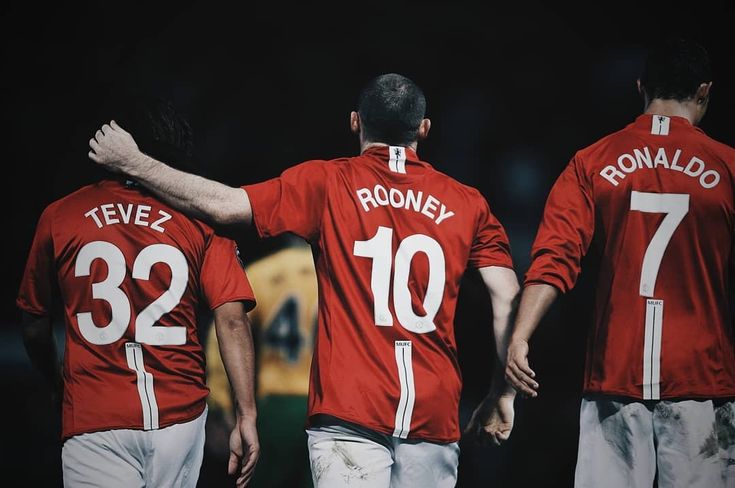
Tevez, Rooney, Ronaldo Trio, 2008

  • Wearing the iconic red of Manchester United, No. 32 Tevez, No. 10 Rooney, and No. 7 Ronaldo walk off the pitch side by side. They were the fearsome attacking trio that struck terror into every defense.

Quote

  • How many times must a man look up before he really sees the sky.
Between Reason and Emotion: Rethinking the Relationship Between the Creator and the Creation

In today’s information-saturated world, where public figures often face backlash or “cancellation,” a recurring question emerges: When a person is no longer deemed acceptable, should we still acknowledge or use the work they helped create?

This dilemma is not merely about right or wrong—it reflects the tension between rational judgment and emotional response, and challenges our understanding of individual versus collective effort, contribution versus value.


A Creation Is Not Its Creator

First and foremost, we must distinguish between a work and its creator. Take a major platform or product, for instance—it may have been initiated or led by a well-known figure, but its development is the result of collaboration among thousands of people, from design and development to marketing and customer support.

Although a public figure may receive more visibility or benefit from such work, it is unfair and overly simplistic to equate the entire creation with that individual. Dismissing the value of a system or product purely because of personal dislike for one person may reveal a limited grasp of the complexity behind such endeavors.


The Validity of Ideas Doesn’t Depend on the Individual

Similarly, the value of ideas, theories, or methods should not be judged solely based on the moral standing of the people who popularized them. Many theories attributed to specific individuals are not their sole invention but rather the result of observation, synthesis, and articulation of broader patterns or truths.

These insights often stem from collective progress rather than personal brilliance. In other words, if one person hadn’t articulated them, someone else likely would have. Evaluating an idea’s merit should focus on its content and relevance—not who said it.


Rational Choices, Emotional Freedom

From a rational standpoint, if a product or piece of content brings value—perhaps a program that inspires or a tool that improves efficiency—it makes sense to continue using it. After all, acquiring knowledge and skills is ultimately for personal growth, and we shouldn’t let emotions overshadow that.

But emotionally, we also have the right to disengage. Maybe we dislike a person’s tone, or we no longer want to support the image they represent. That’s valid too. Emotion isn’t the opposite of reason—it’s often a natural extension of our values and a form of internal logic in itself.


Striking a Balance Between Reason and Emotion

We don’t need to reduce every judgment to a black-or-white stance. Disliking someone doesn’t mean we must reject everything they’ve done. Likewise, appreciating a piece of work doesn’t mean we endorse or idolize its creator.

We can remain critical of an individual while still recognizing the value in their contributions. We can also enjoy and learn from a creation without placing the creator on a pedestal. This isn’t hypocrisy—it’s a more nuanced, mature, and compassionate way of thinking.


Conclusion

There’s no simple equation between people and their work. Disapproval of a person doesn’t require wholesale dismissal of their contributions; valuing their work doesn’t imply blind admiration of who they are.

Finding a balance between reason and emotion might just be the most natural and steady way for us to navigate a world full of complexities and contradictions.


Picture

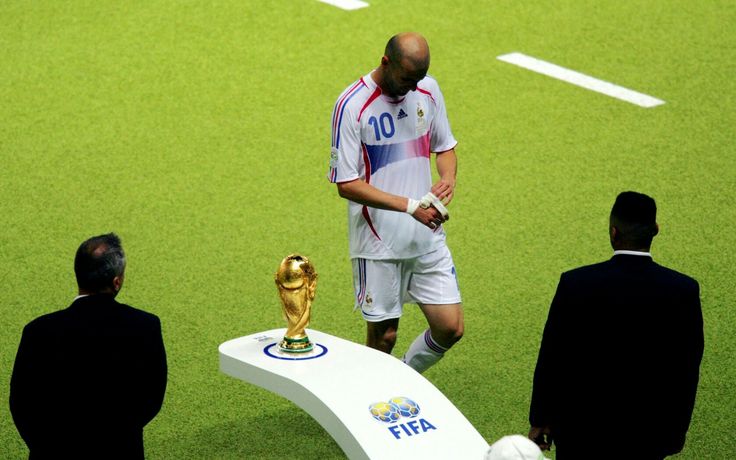
Zinedine Zidane's Final Walk, 2006

  • July 9, 2006, Berlin Olympic Stadium. In the final match of his career, Zidane was sent off with a red card and walked past the World Cup trophy he had dreamed of so many times.

Quote

  • It is difficult to free fools from the chains they revere.

Icons, Belief, and the Ideal Self

When we’re young, we love to talk about our idols. T-Mac, Kaká, Curry, Messi, Henry… the ones who shone bright on the court or field. They ran faster, jumped higher, showed unshakable will and stunning skills. To me, they were the reflection of the kind of person I hoped to become.

But as time passed, I started to realize something important: an idol is just an idol—they are not me. I used to hope T-Mac would rise again after injuries, dreamed of Kaká returning to his AC Milan glory days. When they didn’t, I felt disappointed, even sad. It was like my emotions were tied to someone I had no influence over. I remember the Warriors’ 73-win season ending in a heartbreaking Finals loss. That emptiness lingered way too long. But now I realize how absurd it was. Letting my emotions be controlled by something I had zero control over? That’s not passion—that’s foolishness.

An idol, in essence, is just the embodiment of values we resonate with. They’re not the real person with all their complexities. They’re just a symbol—a snapshot of who we wish we could become. That doesn’t change even if their career declines or their reputation fades.

Take Lu Xun, for example. Some people adore him, others criticize him. But truth is, we all admire different versions of him—what he stood for in our own minds. If someone insults him, they might not even be attacking the version you admire. We aren’t drawn to the person, we’re drawn to the values they represent—values that mirror something within ourselves.

That’s the key: It was never about them. It was always about us.


We’re not meant to become someone else. We’re meant to become who we want to be.

And that’s when the power of the mind comes into play. Your mindset shapes everything. It’s not just motivational fluff—it’s real. When you believe in yourself, you take the first step. When you don’t, you never even try.

As Gandhi put it:
Beliefs become thoughts, thoughts become words, words become actions, actions become habits, habits become values, values become destiny.

So create a vision in your mind: “This is the person I want to be.” Imagine walking, talking, and acting like that version of yourself. Pretend you already are that person, and live like it. Bit by bit, you’ll start to become that person.


Someday, when your journey is near its end and you look back at your life, the biggest regret would be not becoming your true self. The idols you once admired? They were just lighthouses—they showed the way, but you had to take the steps yourself.

Don’t worry about whether others like your idols, or if those idols fall from grace. Because what you truly admired wasn’t them, it was the light they stood for.

Idols can be a beginning. They can be a spark. But in the end, it’s your fire that has to burn.


Picture

Messi, Suarez, Neymar Trio, 2015

  • That year, MSN were in their prime — a symbol of the golden age of football and its timeless romance.

Quote

  • Knowing yourself is the beginning of all wisdom.