Why Do We Fear Cemeteries Even If We Don’t Believe in Ghosts?

Many people consider themselves rational and don’t believe in ghosts. Yet, when walking alone into a cemetery at night, uneasiness and even fear can arise. This reaction is not a remnant of superstition, but rather the result of human psychology and cultural memory working together.

This question is quite typical and reflects the complexity of human psychology and culture. Simply put: even if we don’t believe in ghosts on a rational level, our emotions and subconscious are still influenced by evolution, instinct, and culture.


1. Evolutionary Instincts and Environmental Triggers

The human brain has been shaped over a long evolutionary process. For survival, our ancestors had to stay alert in dark, desolate, and silent places (like forests, caves, or graveyards) because predators or enemies could be lurking.

Even today, in our relatively safe societies, this instinctive vigilance toward the unknown or toward “death-charged” environments remains buried in our subconscious, manifesting as unease and fear.

A cemetery is exactly this kind of place: “low visibility + silence + emptiness.” Such settings naturally activate our built-in alarm systems. When light, companionship, and control are absent, fear can operate like an “auto-start” program, immediately triggered.

What we fear is not ghosts, but potential danger and uncertainty.


2. Cultural Conditioning and Subconscious Influence

From childhood, we are repeatedly exposed to stories, legends, and films that portray cemeteries, night, and the supernatural as frightening. These cultural messages become embedded in our collective memory.

Even if you don’t believe in ghosts rationally, standing alone in a cemetery can activate these cultural associations, producing unease.

For example, many people don’t actually fear “ghosts,” but if they walk alone at midnight through a dark hallway, an abandoned house, or a cemetery, they become inexplicably tense. It’s not belief—it’s the brain automatically linking such environments to danger or impurity.

When you find yourself in that setting, your brain pulls up the “horror scene template,” amplifying tension and fear. What you fear is not a specific ghost, but the cultural framework equating cemeteries with danger.


3. The Innate Fear of Death

A cemetery symbolizes death, and humans are naturally inclined to fear or revere it. Even if you are an atheist, it’s impossible to face death without any psychological reaction.

What frightens us is not necessarily “ghosts,” but the fact that in a cemetery, we are forced to confront death itself—an existential unease:

  • “One day, I too will die.”
  • “What happens after death?”
  • “Does life have meaning?”

These questions are not about belief in ghosts, but about the natural human response to recognizing our own finitude.

Standing in a cemetery, you are not fearing spirits—you are facing your own mortality. Questions like “What is the meaning of life?” or “What happens after I’m gone?” quietly surface, stirring deep anxiety and dread. This is existential fear, tied not to superstition, but to consciousness itself.


Conclusion: To Be Human Is to Fear

What you fear is not ghosts, but:

  • Potential danger and uncertainty (evolutionary instincts + environmental triggers)
  • The symbolism of death (existential fear)
  • Cultural conditioning (collective subconscious)

Therefore, even without belief in ghosts, feeling uneasy or frightened when walking alone through a cemetery at night is completely natural.
It’s not a matter of superstition—it’s a matter of being human.

Fearing cemeteries doesn’t mean you’re irrational; it simply shows you still possess a complete human psychology.


Picture
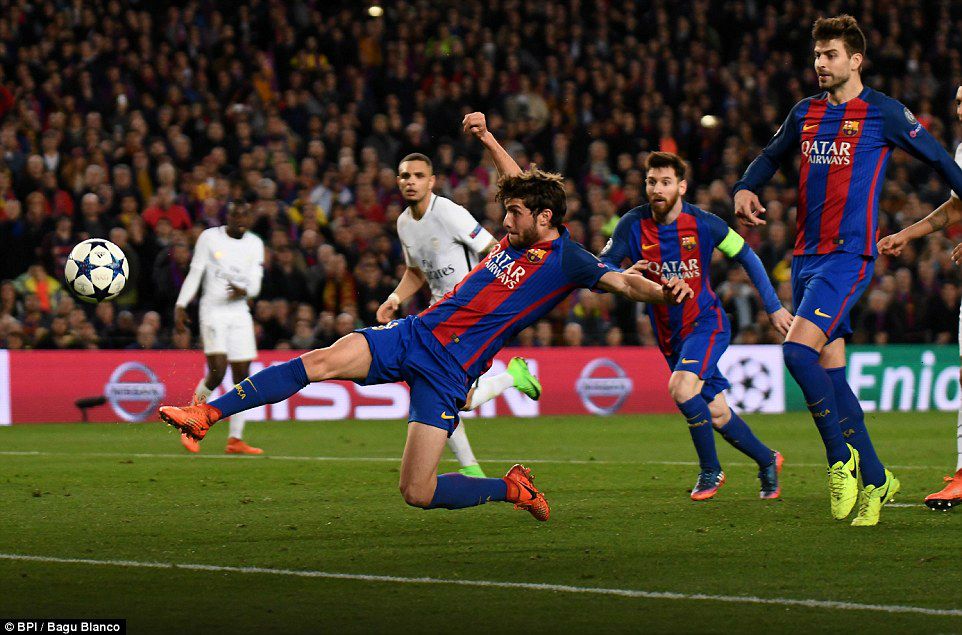
Sergi Roberto scored the decisive sixth goal, 2017

  • On March 8, 2017, in the Champions League Round of 16 second leg at Camp Nou, Barcelona’s Sergi Roberto scored the decisive sixth goal in stoppage time to complete a 6–1 victory over Paris Saint-Germain, sending Barça through 6–5 on aggregate.

Quote

  • Courage is resistance to fear, mastery of fear, not absence of fear.

Death: The Inevitable Termination of Consciousness and Humanity’s Futile Resistance

Death is the unavoidable endpoint of life. From a biological standpoint, it is the irreversible cessation of systemic function. From the standpoint of consciousness, it is the eternal disappearance of self-awareness, perception, and being. On the scale of the cosmos, an individual’s death is neither special nor significant—merely a local collapse of informational order. Yet to humans, it is the ultimate and inescapable problem, as it marks the boundary of subjective experience.


1. The Nature of Death: The Break in Consciousness

We are used to defining death biologically, but that’s not the true source of human fear. One does not panic at the phrase “cardiac arrest.” What causes anxiety is the knowledge that such an event marks the end of the “self.”

Death cannot be felt, because feeling requires consciousness—and consciousness ends with death. Thus we arrive at a stark conclusion:

Death is not an experience, but the absence of all experience.
It is not a painful state; it is the total absence of any state. Therefore, “the feeling of death” is a blank space in language and cognition—an imagination of the living, not the lived reality of the dead.


2. Why Humans Fear Death: A Product of Evolution and Neural Architecture

From an evolutionary perspective, fear of death is a survival mechanism. Organisms that lacked this fear would not avoid danger, and would be quickly eliminated through natural selection. Fear of death, embedded deep within neural circuits, is an automatic reaction.

But in modern humans, this reaction has become disproportionate and inescapable. We know we will die, yet we cannot know when or how. We possess self-awareness, yet this awareness cannot protect us from its own termination.

This is the paradox of death anxiety: we know the end exists, yet cannot experience or resolve it.


3. Obsession and Meaning: Is Love, Family, or Career Merely a Strategy for Avoiding Death?

Many people claim they “live for” family, love, career, or faith. On the surface, these are noble motives. But viewed through the lens of evolutionary psychology and neuroscience, the picture grows more complicated:

  • Attachment and love activate survival-oriented dependency systems.
  • Career and faith stimulate reward circuits, offering positive feedback that “I am still alive.”
  • Obsession with meaning may not be about external values, but a disguised expression of the fear of death.

In short, what we call “love” or “faith” may not be free choices but neurological expressions of survival programming, wrapped in emotional and cultural language. We cling to certain values not necessarily because they are real, but because they allow us to forget death—or to feel that living is still “worth it.”
This doesn’t invalidate such emotions, but it reframes them as strategies, not metaphysical truths.


4. The Collapse of Meaning: Death Terminates All Narratives

If death is the end of consciousness, then it also marks the collapse of meaning. “The meaning of life” becomes void the moment the subject ceases to perceive or recall it.

Religious and metaphysical stories (heaven, reincarnation, soul) are attempts to buffer against this void. Their psychological function is to sustain the illusion of continued existence beyond awareness.

From a materialist perspective, this leads to a rational assertion:

Death not only ends life but dismantles the narrative scaffolding of meaning.


5. To Live Freely Despite Death: Divine Perspective or Neural Reconfiguration?

Some people, after fully confronting the reality of death, choose to live on their own terms—no longer driven by social norms, biological imperatives, or external validation.
Is this freedom from the genetic script—a kind of divine, godlike awareness?

Superficially, yes. Choosing not to have children, reject careerist goals, or defy emotional dependencies seems like liberation. But from a cooler perspective, these behaviors may still originate within reward systems of the brain.

Even the decision to “do what I like” is shaped by chemical feedback loops that define “liking.”

Free will, if it exists, has never been proven. Even if it does, it may still function within the limits of our neural architecture.

Thus, “freedom” and “programming” are not opposites but points on a continuum. Autonomy may merely be the brain translating instinct into complex language.


6. Strategies to Resist Death: Cultural Myths and Technological Delusions

Throughout history, humans have developed various strategies to resist death:

  1. Religious Narratives – promise an afterlife
  2. Cultural Memory – strive to leave a legacy
  3. Biological Reproduction – continue a version of the self
  4. Digital Uploads – fantasies of mind preservation
  5. Cryonics – hope in technological resurrection

Yet none of these truly solve the core issue:

Consciousness, once ceased, cannot be restored.

Even if memory is copied, behavior replicated, or image preserved, these are shadows—not the self.
Science and culture, at best, delay or distort death; they do not negate it.


7. Acceptance: The Only Rational Stance Toward Death

Stripped of illusions, humanity has one truly rational option in facing death: acceptance.

Acceptance is not celebration. It is not poetic romanticism. It is simply acknowledgment: death is unchangeable and needs no justification. It is not malicious, not meaningful, and not negotiable.

Hence, the real question becomes:

Given the certainty of death, which actions are still worth executing?
Not a moral query, but a problem of allocation—of time, energy, and cognitive resources.


Conclusion: To Exist Calmly in the Shadow of an Inevitable End

Death is neither enemy nor friend. It does not respond to our emotions, nor recognize our thoughts. It is the final state, and it is irrevocable.

The only lucid human response is to see it, accept it, and live accordingly—without illusions and without poetic escape.

Death is cold, but clear. Humanity is futile, but need not be blind.


Picture

Sergio Agüero scored a dramatic winner against QPR, 2012

  • On May 13, 2012, Manchester City striker Sergio Agüero scored a dramatic winner against QPR in the 93rd minute and 20th second, securing a 3-2 comeback victory and delivering City’s first top-flight league title in 44 years. This iconic moment became one of the most legendary title-clinching goals in Premier League history, known as the “93:20 Miracle.”

Quote

  • The fear of death follows from the fear of life. A man who lives fully is prepared to die at any time.