A Rational Analysis of the “Power–Humiliation” Mechanism in the Workplace

A Rational Analysis of the “Power–Humiliation” Mechanism in the Workplace

In modern workplaces, organizational structure and power dynamics exert significant influence over employee behavior. While management styles vary across industries and companies, in some highly hierarchical organizations, a distinct “power–humiliation” mechanism can be observed. This mechanism is not necessarily a reflection of individual moral failings, but rather a product of systemic pressures and structural incentives. The following offers a rational analysis of these workplace phenomena.

1. The Behavior Pattern of Pleasing Upward and Pressuring Downward

In certain organizational cultures, some employees adopt a strategy of pleasing superiors to gain favor, job security, or promotion opportunities. This may involve taking on excessive workloads, excessive flattery, or tolerating unreasonable demands. Simultaneously, these individuals may assert dominance over subordinates or peers to reinforce their own position. While this behavior may be seen as a pragmatic survival tactic, it often contributes to hierarchical rigidity and deteriorating trust within teams.

2. Rationalizing Harmful Actions as “Just Doing My Job”

When employees are tasked with ethically questionable duties—such as overworking subordinates, concealing information, or enabling non-transparent practices—they may adopt a mindset of “I’m just following orders” or “it’s what the company requires.” This rationalization helps reduce cognitive dissonance and shift responsibility upward. However, over time, this diffusion of accountability may erode ethical standards and organizational integrity.

3. Internalization and Replication of a Humiliation Culture

In some environments, humiliation-based management practices—such as public criticism, personal belittlement, or the denial of individual effort—are not isolated incidents but embedded norms. Employees subjected to such treatment over time may internalize it as normal, and eventually replicate the same behaviors once they ascend into managerial roles. This transition from “victim” to “perpetrator” reinforces a cycle that makes positive cultural change difficult.

4. Top-Down Pressure in Pyramid-Like Structures

Many organizations operate under a strictly hierarchical, top-down structure. Middle managers, situated between executive leadership and front-line staff, often bear the burden of translating high-level goals into concrete actions. To maintain favor with upper management, they may intensify pressure on their teams, leading to a “pressure cascade” that can result in burnout, dissatisfaction, and high turnover at the bottom levels of the organization.

5. Humiliating Others to Reinforce One’s Own Position

In competitive and resource-constrained workplaces, some mid- or high-level employees may adopt a defensive posture by criticizing or suppressing others. This behavior often stems from job insecurity and the fear of being excluded from decision-making circles. By diminishing others, they attempt to reaffirm their relevance and demonstrate continued alignment with upper management. This is a psychological defense mechanism, not merely an expression of authority.

Conclusion

These workplace phenomena illustrate how power and humiliation can become deeply intertwined in certain organizational cultures. While such mechanisms may appear to support efficiency and control on the surface, their deeper effects involve fear, alienation, and psychological strain.


Picture
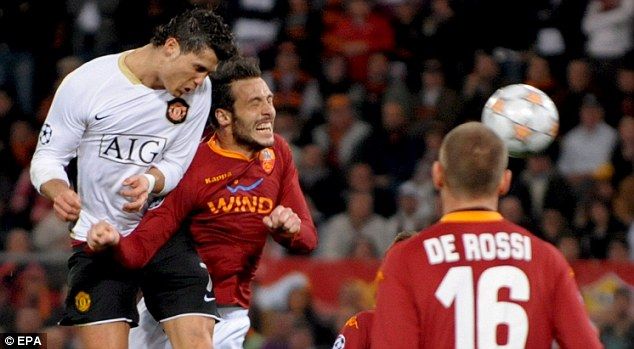
Cristiano Ronaldo, header, Champions League, Roma, 2008

  • On April 1, 2008, during the first leg of the Champions League quarter-finals, Manchester United’s Cristiano Ronaldo rose high to score a header against Roma at the Stadio Olimpico. United won the match 2-0 away from home.

Quote

  • The only thing necessary for the triumph of evil is for good men to do nothing.
Source Bias and the Psychology of Trust in Information

In the complex landscape of information exchange, the credibility of a message often depends not just on its content but also on its source. This phenomenon, widely recognized in psychology and communication studies, is essential for understanding human interactions, public opinion formation, and decision-making processes.

I. Mechanisms of Source Bias

Definition and Background
Source bias refers to the tendency of people to judge the credibility and reliability of information based not solely on the message itself, but significantly on the identity of the person or institution delivering it. This bias is pervasive in everyday life. For instance, a statement from a respected scientist is likely to be taken more seriously than the same statement from an unknown individual.

Reasons for Source Bias

  1. Motivational Skepticism: When information comes from a source with a clear self-interest, people tend to be skeptical of its accuracy. For example, a company praising its own product is often viewed as biased, as the motivation for profit is obvious.
  2. Authority Effect: Information from figures perceived as experts or authority figures carries more weight because they are presumed to have superior knowledge and judgment. This effect is a key component of persuasion and trust building.
  3. Third-Party Validation: Independent endorsements are typically more influential than self-promotion, as they are seen as more impartial and less likely to be distorted by personal motives.

II. The Paradox of Self-Defense

Definition and Background
Self-defense, in the context of communication, refers to the act of defending one’s own credibility or actions. Ironically, the more one tries to justify themselves, the less credible they often appear. This paradox arises from deep-seated cognitive biases.

Reasons for This Paradox

  1. Defensive Motivation: When someone feels the need to defend themselves, others may instinctively doubt their intentions, suspecting that they are hiding something. This erodes the perceived objectivity of their message.
  2. Cognitive Dissonance: People tend to reject information that contradicts their pre-existing beliefs, creating a psychological discomfort that leads them to discount the validity of the message.
  3. Information Asymmetry: If the person defending themselves appears to know less about the situation than the audience, their arguments can seem weak or unconvincing.

III. The Social Proof and Conformity Trap

Definition and Background
Social proof refers to the psychological phenomenon where individuals rely on the behaviors and opinions of others to shape their own judgments and actions, especially in uncertain situations. This effect is not just common among individuals but also plays a critical role in group dynamics and public opinion.

Reasons for Social Proof Dependence

  1. Cognitive Simplification: When people face complex or ambiguous information, they often rely on the actions of others as a mental shortcut to reduce cognitive load.
  2. Peer Pressure: Individuals in group settings are heavily influenced by the behaviors of those around them, leading to conformity and a stronger reliance on group norms.
  3. Transfer of Trust: Broad social acceptance acts as a form of implicit validation, making certain information appear more credible by association.

IV. Broader Implications: Information Control and Opinion Shaping

Beyond individual psychology, the power of source bias extends into broader social contexts, including political propaganda, corporate branding, and media influence. Modern strategies for controlling public opinion often leverage these cognitive tendencies:

  1. Elite Control: Those who control major communication channels can shape public perception by selectively filtering information and framing narratives.
  2. Information Monopolies: When information sources are concentrated among a few powerful entities, the impact of source bias is amplified, leading to homogenized worldviews.
  3. Algorithmic Bias: In digital spaces, algorithms that prioritize certain content over others effectively create echo chambers, reinforcing pre-existing biases and limiting exposure to diverse viewpoints.

V. Conclusion

Understanding source bias is crucial not only for personal critical thinking but also for navigating the modern media landscape, where the line between fact and spin is often blurred. This awareness helps individuals better assess the reliability of the information they encounter and make more informed decisions.


Picture

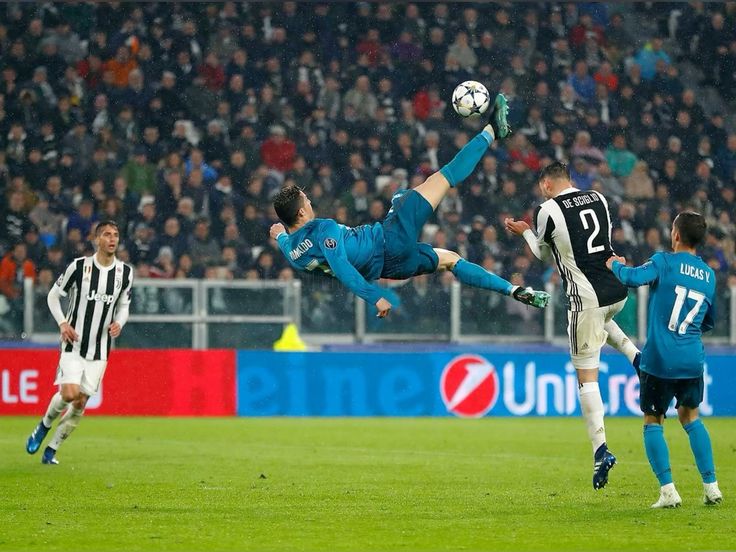
Cristiano Ronaldo scored a bicycle kick goal, 2018

  • On April 3, 2018, in the first leg of the UEFA Champions League quarter-finals at Allianz Stadium in Turin, Italy, Cristiano Ronaldo scored a bicycle kick goal against Juventus that stunned the world.

Quote

  • We are more inclined to believe those we like than those who speak the truth.

Let’s See You Do Better! — A Full Guide to Classic Logical Fallacies on Football Forums

I used to watch debate competitions back in the day, and I realized that the point wasn’t always to arrive at the “truth.” More often, it was about sharpening your thinking, getting better at spotting flawed logic, and maybe stumbling upon ideas worth reflecting on after the debate ends. The real value lay not in the conclusion, but in the clash of ideas.

Unfortunately, whether it’s in formal debates or rowdy football forums, many so-called “mic drop” moments aren’t built on solid logic, but rather on quick wit and verbal gymnastics. They might win the crowd, but they’re riddled with fallacies. So today, let’s bring some of that slick forum banter into the light—and dissect the most common logical fallacies you’ll see on sports forums.


1. “Let’s See You Do Better!” – The Credential Fallacy

Typical lines:

  • “You don’t even have a C-level coaching license. Who are you to criticize Guardiola?”
  • “You just sit at home watching games. What do you know about tactics?”

Logical issue:
This is a classic ad hominem—attacking the person instead of addressing their argument. By dismissing someone’s opinion based on their credentials (or lack thereof), it dodges the real topic. If only certified coaches were allowed to discuss football, forums would be ghost towns.


2. “Either You’re With Us or Against Us!” – The Black-and-White Fallacy

Typical lines:

  • “If you think Mbappé played poorly today, you’re saying he’s overrated.”
  • “If you don’t support VAR, then you must be fine with bad calls.”

Logical issue:
This is a false dichotomy. The real world isn’t binary. You can think Mbappé had a bad game and still rate him highly. You can criticize VAR implementation without rejecting technology in football.


3. “Have a Heart!” – Emotional Blackmail

Typical lines:

  • “He’s only 18, how can you criticize him?”
  • “His wife just had a baby. Cut him some slack!”

Logical issue:
This is an appeal to emotion. While empathy is important, it shouldn’t replace rational analysis. Facts don’t disappear just because someone’s in a tough spot.


4. “But He’s Such a Good Person!” – The Red Herring

Typical lines:

  • “You say he can’t finish? He donates more to charity than any other player!”
  • “With his character, we shouldn’t be blaming him for a poor season.”

Logical issue:
This is a red herring—diverting attention from the topic. Being kind off the pitch doesn’t mean you’re immune to criticism on it. Character and performance aren’t mutually exclusive.


5. “So You’re Saying He’s Trash?” – The Straw Man

Typical lines:

  • “You said he can’t defend, so you’re saying he doesn’t deserve to be on the national team?”
  • “You questioned that penalty call, so you support foul play?”

Logical issue:
This is the straw man fallacy—misrepresenting someone’s argument to make it easier to attack. It feels like a win, but it’s just punching a fake opponent.


6. “Everyone’s Out to Get Us!” – The Conspiracy Theory

Typical lines:

  • “The ref was obviously paid off.”
  • “FIFA just doesn’t want us in the semi-finals.”

Logical issue:
This is conspiracy thinking—asserting shady motives without evidence. Yes, unfair calls happen. But assuming a global agenda against your team is a stretch.


7. “Everyone I Know Agrees” – Small Sample Fallacy

Typical lines:

  • “No one around me supports Real Madrid anymore. They’re clearly losing fans.”
  • “Everyone in my group chat says Ronaldo’s done. He should retire.”

Logical issue:
This is hasty generalization. Your local echo chamber doesn’t represent global opinion. Anecdotes aren’t statistics.


8. “Don’t Confuse Me with Facts!” – Confirmation Bias

Typical lines:

  • “I don’t care! I like him no matter what!”
  • “You can show me all the stats you want—I trust my eyes!”

Logical issue:
This is confirmation bias—cherry-picking info that fits your view and ignoring the rest. It’s not analysis, it’s emotional fandom.


9. “Once a Diver, Always a Diver” – The Fixed Timeline Fallacy

Typical lines:

  • “He faked injuries before, so he’s still doing it.”
  • “He sucked last season. Don’t expect anything this year either.”

Logical issue:
This assumes people can’t change—denying the possibility of growth or recovery. Players evolve. Form is temporary, after all.


10. “That One Time Proves Everything” – Overgeneralization

Typical lines:

  • “Messi didn’t console his opponent that one time—he’s got no sportsmanship.”
  • “Ronaldo cursed at a ref once. Terrible person.”

Logical issue:
This is overgeneralization. One-off incidents don’t define an entire character or career. Everyone has bad days.


So, Why Bother Debating at All?

Let’s go back to where we started: real debates aren’t about winning—they’re about exchanging ideas, testing logic, and expanding perspectives.

But in practice, most forum fights are just performance—logic shortcuts, emotional outbursts, and shouting matches disguised as discussions.

Football forums could be places of deeper thought, not just verbal brawls. Let’s aim for arguments that are thoughtful, not just loud; points that make people think, not just clap. That’s what true debate should be about.


Picture

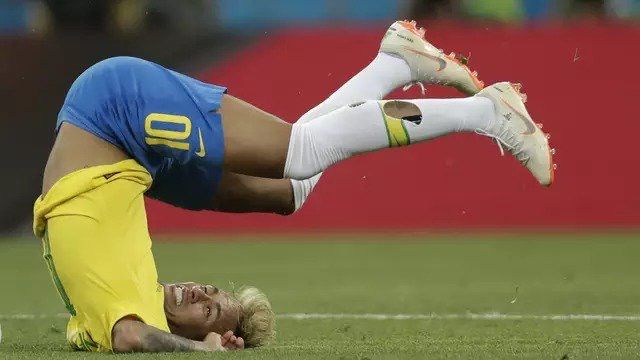
Neymar's diving, 2018

  • In the 2018 World Cup group match between Brazil and Switzerland, Neymar drew controversy for his exaggerated falls.

Quote

  • The aim of argument, or of discussion, should not be victory, but progress.

Why Do We Always Miss the Past? — On Memory, Time, and the Psychology of Self

I. Introduction: The Paradox of Nostalgia

The human brain has a curious tendency: at an age when we should be looking forward, we often find ourselves looking back. People in their twenties and thirties frequently say, “Those were the good times,” even if those times weren’t perfect.

This nostalgia isn’t a random emotion—it’s a complex psychological phenomenon involving memory mechanisms, identity construction, time perception, and existential anxiety. Understanding this process offers not only a clearer view of ourselves but also a deeper glimpse into what it means to be human.


II. How the Brain Processes Time and Memory

1. Memory Is Reconstructed, Not Recorded

  • Neuroscience confirms that memory is not a perfect recording system. Instead, every act of recall is a reconstruction, influenced by our current emotions, needs, and mental state.
  • This allows the brain to emotionally process and reshape memories—especially when the present is stressful or unsatisfying, the past is reimagined as a “safe haven.”

2. The “Reminiscence Bump” and Youth Memory Bias

  • Studies show that the most vivid and frequently recalled memories cluster around the ages of 15 to 25, known as the reminiscence bump.
  • During this period, the brain is most active in learning and emotional encoding, forming strong impressions through a series of “firsts”: first love, graduation, failure, dreams—all of which shape personal identity.

III. The Psychological Functions of Nostalgia: Emotion and Identity

1. A Tool for Emotional Regulation

  • When life feels uncertain—such as during early adulthood transitions—nostalgia activates automatically to restore emotional balance.
  • Research shows that people who feel socially excluded or overwhelmed tend to become nostalgic as a way to reconnect with a sense of belonging and self-worth.

2. Building a Coherent Sense of Self

  • Humans don’t merely live in the present—we structure life through a sense of temporal continuity. Nostalgia affirms the narrative that “I am still me, shaped by what I’ve been.”
  • Philosopher Charles Taylor refers to this as narrative identity: we make sense of who we are by telling the story of our past.

IV. Nostalgia and the Awareness of Time

1. Humans Are the Only Beings That Reflect on Time

  • Unlike animals, humans possess future projection and past reflection, creating a tension between memory and anticipation.
  • Nostalgia arises from this tension. When the future feels uncertain or disappointing, the past becomes a source of stability and emotional refuge.

2. A Response to Existential Loss

  • Nostalgia is not just about longing for happy times—it reflects an awareness of irreversible change: youth fades, relationships shift, possibilities narrow.
  • This is a form of temporal melancholy—a grief for what can never return.
  • Thus, nostalgia becomes a way to affirm the meaning and coherence of our existence, a quiet resistance to the void of meaninglessness.

V. A Philosophical View: How to Remember Without Escaping

Nostalgia is evidence of our humanity. But when indulged too often, it becomes a refuge from growth. True maturity lies not in avoiding memory, but in carrying it forward with us into the future.

As novelist Haruki Murakami once wrote:

“It’s not the nostalgia that hurts—it’s the realization that the person we were back then is no longer reachable.”


VI. Conclusion: Nostalgia as a Gentle Resistance to Time

We long for the past not because we are weak, but because in the face of complexity and chaos, we seek emotional continuity. Nostalgia reminds us that:

We were here. We loved. We lived. And we are still becoming whole.


Picture

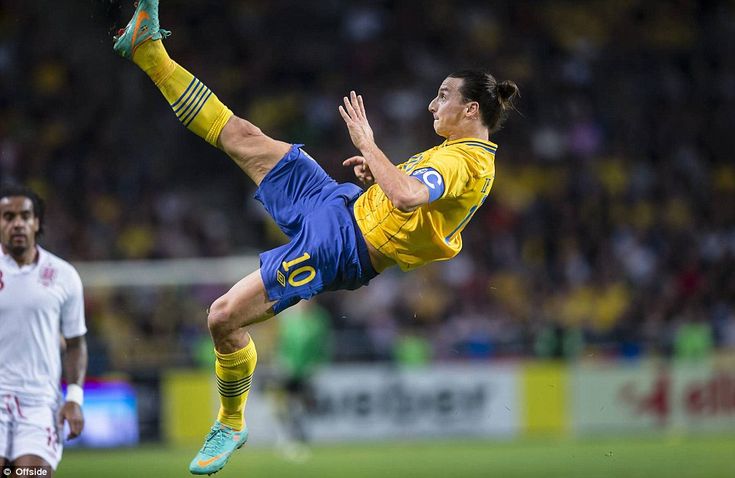
Zlatan Ibrahimović Bicycle Kick, 2012

  • On November 14, 2012, during a friendly match against England in Stockholm, Zlatan Ibrahimović scored his fourth goal of the night with an astonishing 30-yard overhead kick.

Quote

  • To live is the rarest thing in the world. Most people exist, that is all.

Faith: A Psychological Cue or the Wisdom of Humanity?

Do we need faith?
In this age of information overload and rational thinking, the question might seem outdated. Many people instinctively equate “faith” with “superstition,” as if believing in something invisible automatically makes one unscientific or irrational. But is it really that simple?

Faith ≠ Religion

Faith does not necessarily mean religion. Religion is just one form of expressing faith. True faith is more like an internal compass—it guides how we live, how we make decisions, and how we face the uncontrollable parts of life.
For example, some believe in “hard work pays off,” others in “good karma,” or even “fate will sort itself out.” These aren’t religions, but they shape people’s behaviors and life paths.

Religion, in turn, is the systematization and ritualization of faith, passed down through tradition and culture. A well-developed religion often carries deep philosophical thought and social wisdom.

Faith as a Summary of Human Experience

Why do we form faiths?
Because humans are exceptional at recognizing patterns.

Throughout history, we’ve suffered disasters, witnessed moral failures, and also experienced acts of great wisdom and compassion. When certain behaviors are repeatedly proven effective and beneficial, we tend to distill them into belief systems—what we call faiths or religions.

Rules like “do not kill,” “respect others,” or “observe discipline” may seem simple, but they are distilled from thousands of years of collective human experience about how to live well together.

And let’s be honest—resources are limited. Not everyone can access quality education or grasp complex ethical reasoning. For many, a straightforward, unquestionable system of faith is more practical. It allows people to act correctly without needing to understand every nuance behind it.

Good Faith vs. Bad Faith

Faith itself is neutral—what matters is what it leads to.
If a faith encourages kindness, cooperation, and growth, it’s a good faith. If it promotes hatred, extremism, or harm to others, it’s a bad one.

History has seen manipulated faith systems that fueled war, division, and tragedy. But those same examples serve as a warning: without reflection and evolution, faith can become dangerous dogma.

Faith as a Psychological Tool

From another perspective, faith can also be seen as a psychological tool.
Humans are not purely rational—we need support, meaning, and something to hold on to when life gets chaotic.

In this sense, faith functions like a psychological toolbox:

  • Habits are unconscious faith in routines.
  • Tools give us the illusion of control.
  • Positive thinking is a kind of hopeful faith.
  • Even “temporarily lying to yourself” is a belief strategy to survive hard times.

When logic fails and life gets messy, faith is the rope you grab in the dark.
It may not be perfect—but it keeps you moving.

Final Thoughts

Faith isn’t a sign of ignorance—it’s an acknowledgment of human limitations.
It can be religion, philosophy, a way of life, or even just a line you repeat to yourself: “I’ll be okay.”

Faith is not anti-reason—it’s the bridge that helps reason land in everyday life.
What matters most is not whether you have faith, but whether your faith helps you become kinder, stronger, and more free.

Picture

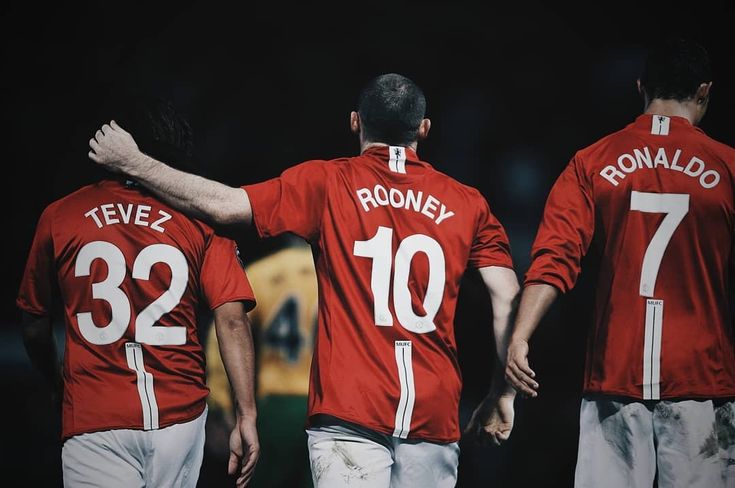
Tevez, Rooney, Ronaldo Trio, 2008

  • Wearing the iconic red of Manchester United, No. 32 Tevez, No. 10 Rooney, and No. 7 Ronaldo walk off the pitch side by side. They were the fearsome attacking trio that struck terror into every defense.

Quote

  • How many times must a man look up before he really sees the sky.