Infinite Numbers in a Finite Life

From the perspective of the future, our present attitude toward money may appear excessively rigid. If you believe that wealth will eventually come, then money is ultimately just a number—a symbol in a ledger, a transferable entry in a bank system. At the end of life, these numbers lose all significance.

High-end consumption is often viewed as extravagance or even waste. Yet such places also tend to offer higher service quality and a richer experience. They are spaces where memories are made and life is felt more vividly. If you believe you are worth it, then price tags need not dictate your choices. The very ability to choose is itself a privilege of resource allocation—one that, to many, remains out of reach.

The utility of money is inherently limited. It can buy time, comfort, and convenience, but not love or respect. It cannot fill spiritual voids, nor can it reverse time. When we use money as a means to pursue ownership, we may in turn become bound by the very numbers we chase—driven by them without realizing it.

One day, we will leave this world, and those numbers will reset to zero. Life is finite, and time is irreversible. The rational choice, then, is to allocate these resources wisely within our limited time—to let them serve the enrichment of our experiences and the realization of life’s value. Compared to numbers themselves, the ability to choose freely and live meaningfully is far more valuable.


Picture

Messi celebrated by holding up his shirt, 2017

  • On April 23, 2017, during the Spanish El Clásico at the Santiago Bernabéu Stadium in Madrid, Messi scored a stoppage-time winner to secure victory for Barcelona, celebrated by holding up his shirt, and marked his 500th goal for the club.

Quote

  • The real measure of your wealth is how much you’d be worth if you lost all your money.

Inconsistent Definitions — The Invisible Trap of Debates

In modern public discourse, conflicts of opinion seem to be everywhere. From online controversies to academic debates and everyday disagreements, people often engage in fierce arguments without reaching any consensus. On the surface, this appears to be a clash of differing viewpoints. But upon closer examination, we find that many seemingly opposing arguments stem not from true ideological divergence, but from inconsistent definitions of key concepts.

I. Definition: The Foundation of Thought

In all logical reasoning, definitions are the most fundamental premises. If a concept is not clearly defined, its referent becomes ambiguous during argumentation, ultimately undermining the entire reasoning structure. Aristotle pointed out in the Organon that scientific discussion should begin with establishing definitions. If we cannot even agree on what we are talking about, how can we agree or disagree meaningfully?

For example, when people debate “the purpose of education,” one party might understand education as “the transmission of knowledge,” while another views it as “the cultivation of character.” This divergence leads to conflict over whether education should focus on academic performance or moral development. However, if both parties recognize their differing definitions of “education” from the outset, much of the disagreement would dissipate or at least shift to a more concrete level.

II. Inconsistent Definitions Lead to Logical Misalignment

Inconsistent definitions directly sabotage valid reasoning. In a chain of logic, if the concept A in the premise is not the same as concept A’ in the conclusion (despite using the same term), the argument commits an equivocation fallacy—one of the most common and subtle logical errors.

For instance, suppose one person claims, “Freedom is the foundation of society, so the government should not restrict anyone’s actions.” Another replies, “If freedom means anarchy, it will only lead to chaos.” The problem is that both are using the term “freedom,” but referring to different concepts: the first might mean “freedom from arbitrary interference,” while the second interprets it as “lack of all constraints.” Without clarifying the definitions, such a debate will never converge.

III. Semantic Drift in Social Contexts

In social contexts, the meaning of terms often drifts depending on group identity, ideology, or situational context. For example, “fairness” to a free-market liberal may mean “equal rules without interfering with outcomes,” whereas to a social justice advocate, it might mean “reasonable outcomes with compensatory opportunity.” Both sides are speaking of “fairness,” but their interpretations are fundamentally at odds.

This semantic drift causes public discourse to devolve into echo chambers. Each side believes it occupies the moral high ground, while in fact, they are attaching entirely different semantic frameworks to the same word. As a result, in the absence of semantic clarification, public discussions often spiral into polarization and the retreat of rationality.

IV. Strategies to Avoid Definition Confusion

To avoid invalid arguments caused by definitional inconsistency, the following strategies are crucial:

  1. Define key terms explicitly: At the outset of a discussion, state clearly how you understand core terms—especially those prone to contextual ambiguity (such as freedom, fairness, justice, rights, etc.).
  2. Clarify the other party’s usage: Before refuting, ensure you understand how the other party is using a term, to avoid talking past each other.
  3. Use operational definitions: In practical or technical discussions, try to concretize abstract terms into measurable, actionable criteria to reduce ambiguity.
  4. Acknowledge multiplicity of meanings: For complex terms that resist unified definitions, admit their polysemy and specify their scope in conversation to build consensus rather than descend into semantic quibbles.

V. Conclusion: Logical Clarity Begins with Linguistic Clarity

Debate itself is not dangerous—what’s dangerous is wasting cognitive resources in logically incoherent discussions. Truly rational discourse is not about aggressive rebuttals, but about collaborative construction based on clear definitions and valid logic. In an era of information overload and overwhelming opinions, perhaps the most essential step toward meaningful communication and deep reasoning is to return to the starting point of language—to clarify the very words we use.


Picture

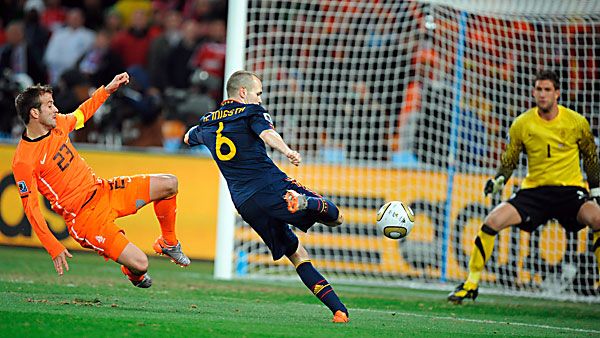
Andrés Iniesta scored the winning goal, 2010

  • In the 2010 FIFA World Cup Final in South Africa, Spanish midfielder Andrés Iniesta scored the winning goal in the 116th minute of extra time, securing a 1-0 victory over the Netherlands and delivering Spain’s first-ever World Cup title.

Quote

  • Most disagreements are not about beliefs, but about the meanings of words.

Why Financial Freedom Is Unattainable for Most People

I. Structural Disadvantage: Wealth Flows from the Many to the Few

  1. Wealth Accumulation Relies on the Labor of Others
    Whether running a company, becoming a social media influencer, or innovating new products, the accumulation of wealth fundamentally depends on leveraging the labor or attention of others. Wealth concentrates in the hands of a few by continuously extracting value from the work of the majority.

  2. All Profits Ultimately Come from Ordinary People
    Even when someone “beats the rich” in a transaction, the wealthy derive their profits from a broad social base—consumers, employees, and public participation. In other words, “beating the rich” still means extracting value from the public, indirectly if not directly.

  3. Institutions Control Information; Retail Investors Are Disadvantaged
    Financial institutions function like ruling elites: they control media narratives and access to information. Retail investors, fragmented and unorganized, suffer from severe informational asymmetry and lack the ability to resist systematic manipulation. This inherent structural inequality ensures most individuals remain on the losing side.


II. Double Disadvantage in Capital and Cognition: Ordinary People Cannot Afford to Lose

  1. Limited Capital, Low Risk Tolerance
    Most individuals lack spare capital. Without a financial buffer, a single mistake can erase all prior gains. Unlike institutions, ordinary people cannot afford to lose multiple times before succeeding.

  2. Lack of Knowledge Leads to Blind Investment
    Many enter the market during bull runs, buying high and refusing to sell in time. Driven by greed and crowd psychology, they become “bag holders.” The absence of risk awareness and exit strategies is a key reason for losses.

  3. Leverage Amplifies Fragility
    Investing with borrowed money increases exposure. When losses occur, the impact extends beyond portfolios and into daily life, leading to heightened anxiety and long-term instability.


III. The Probability Trap of Investing: Not Steady Growth, But Disguised Gambling

  1. High Returns Come with High Risk
    Seeing a few success stories, people assume they can replicate them. In reality, these are rare outcomes with low probability—essentially high-risk bets, not sustainable strategies.

  2. Martingale Mindset Magnifies Losses
    The belief that one can double down to recover losses—commonly known as the Martingale strategy—is a dangerous fallacy. A single misstep can wipe out all capital.

  3. Steady Gains Offer Little Real Impact for Most
    Even when modest and stable growth is achieved, the returns are often negligible compared to life’s rising expenses. For most, it does not enable upward mobility or change life’s trajectory meaningfully.


IV. Conclusion & Recommendations: Ordinary People Are Positioned to Be “Harvested”

In this system, the average person is structurally and behaviorally predisposed to lose:

  • Structurally disadvantaged due to lack of voice and asymmetric information;
  • Resource-deficient in terms of capital, time, and risk tolerance;
  • Behaviorally prone to common traps—chasing highs, greed, and herd mentality;
  • Positioned as “yield providers” for the few who extract consistent gains.

Recommendations:

  • Avoid chasing trends, control greed, and exit at the right time;
  • Understand probability—stop fantasizing about getting rich overnight;
  • Focus on improving quality of life instead of chasing the illusion of “financial freedom.”

Picture

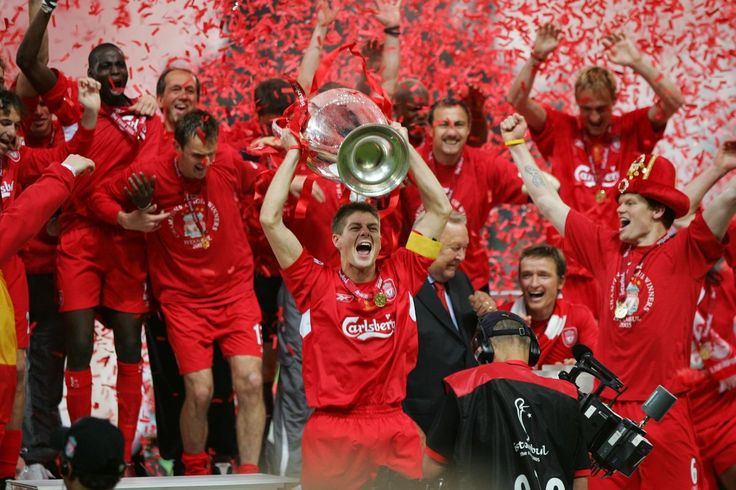
Liverpool staged the “Miracle of Istanbul”, 2005

  • On May 25, 2005, at the Atatürk Olympic Stadium in Istanbul, Liverpool staged the “Miracle of Istanbul” in the UEFA Champions League final: coming back from a 0-3 deficit to draw level, and ultimately defeating AC Milan in a penalty shootout to claim their fifth European Cup title.

Quote

  • Hope is the opium of the people.

Metaphor: The Boundary Between Understanding and Misleading

As a rhetorical device in language, metaphor is widely used in various types of texts, especially in academic writing, literature, and public speaking. Its main function is to make complex or abstract concepts easier to understand by comparing them to familiar or intuitive objects or experiences. However, the use of metaphor is not always harmless—if not employed carefully, it can shift from facilitating understanding to distorting perception. Thus, knowing how to use metaphors appropriately and avoiding their misuse is a key task in both thought and communication.

I. The Fundamental Function of Metaphor

The primary function of metaphor is to aid our understanding of abstract or complex ideas. When faced with unfamiliar phenomena or concepts that are hard to perceive directly, we can draw analogies to familiar, sensory-accessible objects, making the abstract more concrete and comprehensible. For example, when explaining the abstract concept of “time,” people often use “flowing water” as a metaphor to emphasize its continuous and irreversible nature. This analogy taps into our intuitive sense of how water flows, making the idea of time more vivid and easier to grasp.

Furthermore, metaphors can simplify complexity while preserving essential characteristics, allowing people to quickly grasp the core elements of an idea. In teaching, educators frequently use metaphors to help students build conceptual bridges from the known to the unknown, laying the groundwork for understanding new knowledge.

II. The Pitfalls of Metaphor: Deviations from Facts and Logic

Despite its utility in promoting understanding, metaphor can lead to misinterpretation if used imprecisely. First, metaphors are inherently abstract—they often gloss over the complexity of what they describe. For example, in discussions of social phenomena, certain metaphors may overly simplify the issue, reducing a multifaceted situation to a single, concrete image and ignoring the deeper structural factors behind it. While such simplification can evoke emotional resonance in the short term, it may mislead the audience into overlooking the multidimensional and nuanced nature of the problem.

Take the classic metaphor “the market is an invisible hand.” It vividly illustrates the self-regulating function of the market mechanism, but it can also cause people to ignore the limitations of that mechanism, such as information asymmetry or market failures. Over-reliance on this metaphor might foster undue faith in market regulation, neglecting the importance of government intervention and macroeconomic policy.

Second, metaphors are sometimes deliberately distorted to support a particular stance or viewpoint. When used as tools of argument, the underlying logical connections in a metaphor may be oversimplified or manipulated. For instance, in some academic debates, metaphors may frame a complex phenomenon as a binary opposition of “good” versus “evil,” prompting audiences to accept a certain value judgment emotionally rather than analyze the issue rationally. In such cases, metaphor becomes a vehicle for propaganda, concealing the complexity of facts or even distorting reality.

III. The Proper Use of Metaphor: Striking a Balance

To ensure that metaphors fulfill their intended role, we must use them with caution and discernment. First, metaphors should be supportive rather than dominant. They should not replace deep conceptual understanding, but rather serve as auxiliary tools to enhance clarity. For instance, when discussing the philosophical notion of “freedom,” one might use the image of “a bird soaring in the sky” to convey an intuitive sense of the idea. Still, it remains essential to explore the multifaceted meanings, limitations, and realizations of freedom, rather than rely on a metaphor to draw partial or superficial conclusions.

Second, metaphors should align with the essential characteristics of the concepts they describe, avoiding oversimplification or misdirection. The effectiveness of a metaphor lies in its ability to accurately convey a specific aspect of something, not in masking or distorting its complexity. Therefore, when using metaphors, we must ensure they reflect core features and do not carry misleading implications.

Finally, metaphorical usage should respect logic and facts rather than merely rely on emotional appeal. The aim of metaphor is to aid understanding of reality—not to manipulate perspectives through rhetorical flourish. Hence, metaphor should always be grounded in truth and used responsibly, without supporting illogical or unfounded claims.

IV. Conclusion

As a linguistic tool, metaphor can significantly enhance our understanding of complex ideas, making communication more vivid and accessible. Yet, metaphors also come with limitations. If misused, they can become instruments of confusion or distortion. When employing metaphors, we must maintain rational thought and guard against oversimplification or factual distortion. Rational analysis and logical thinking should form the foundation of how we understand and apply metaphor—only then can metaphor truly serve cognition, rather than mislead it.


Picture

Beckham scored a crucial free-kick against Greece, 2001

  • On October 6, 2001, Beckham scored a crucial free-kick against Greece at Old Trafford, sending England to the World Cup.

Quote

  • The limits of my language mean the limits of my world.

Source Bias and the Psychology of Trust in Information

In the complex landscape of information exchange, the credibility of a message often depends not just on its content but also on its source. This phenomenon, widely recognized in psychology and communication studies, is essential for understanding human interactions, public opinion formation, and decision-making processes.

I. Mechanisms of Source Bias

Definition and Background
Source bias refers to the tendency of people to judge the credibility and reliability of information based not solely on the message itself, but significantly on the identity of the person or institution delivering it. This bias is pervasive in everyday life. For instance, a statement from a respected scientist is likely to be taken more seriously than the same statement from an unknown individual.

Reasons for Source Bias

  1. Motivational Skepticism: When information comes from a source with a clear self-interest, people tend to be skeptical of its accuracy. For example, a company praising its own product is often viewed as biased, as the motivation for profit is obvious.
  2. Authority Effect: Information from figures perceived as experts or authority figures carries more weight because they are presumed to have superior knowledge and judgment. This effect is a key component of persuasion and trust building.
  3. Third-Party Validation: Independent endorsements are typically more influential than self-promotion, as they are seen as more impartial and less likely to be distorted by personal motives.

II. The Paradox of Self-Defense

Definition and Background
Self-defense, in the context of communication, refers to the act of defending one’s own credibility or actions. Ironically, the more one tries to justify themselves, the less credible they often appear. This paradox arises from deep-seated cognitive biases.

Reasons for This Paradox

  1. Defensive Motivation: When someone feels the need to defend themselves, others may instinctively doubt their intentions, suspecting that they are hiding something. This erodes the perceived objectivity of their message.
  2. Cognitive Dissonance: People tend to reject information that contradicts their pre-existing beliefs, creating a psychological discomfort that leads them to discount the validity of the message.
  3. Information Asymmetry: If the person defending themselves appears to know less about the situation than the audience, their arguments can seem weak or unconvincing.

III. The Social Proof and Conformity Trap

Definition and Background
Social proof refers to the psychological phenomenon where individuals rely on the behaviors and opinions of others to shape their own judgments and actions, especially in uncertain situations. This effect is not just common among individuals but also plays a critical role in group dynamics and public opinion.

Reasons for Social Proof Dependence

  1. Cognitive Simplification: When people face complex or ambiguous information, they often rely on the actions of others as a mental shortcut to reduce cognitive load.
  2. Peer Pressure: Individuals in group settings are heavily influenced by the behaviors of those around them, leading to conformity and a stronger reliance on group norms.
  3. Transfer of Trust: Broad social acceptance acts as a form of implicit validation, making certain information appear more credible by association.

IV. Broader Implications: Information Control and Opinion Shaping

Beyond individual psychology, the power of source bias extends into broader social contexts, including political propaganda, corporate branding, and media influence. Modern strategies for controlling public opinion often leverage these cognitive tendencies:

  1. Elite Control: Those who control major communication channels can shape public perception by selectively filtering information and framing narratives.
  2. Information Monopolies: When information sources are concentrated among a few powerful entities, the impact of source bias is amplified, leading to homogenized worldviews.
  3. Algorithmic Bias: In digital spaces, algorithms that prioritize certain content over others effectively create echo chambers, reinforcing pre-existing biases and limiting exposure to diverse viewpoints.

V. Conclusion

Understanding source bias is crucial not only for personal critical thinking but also for navigating the modern media landscape, where the line between fact and spin is often blurred. This awareness helps individuals better assess the reliability of the information they encounter and make more informed decisions.


Picture

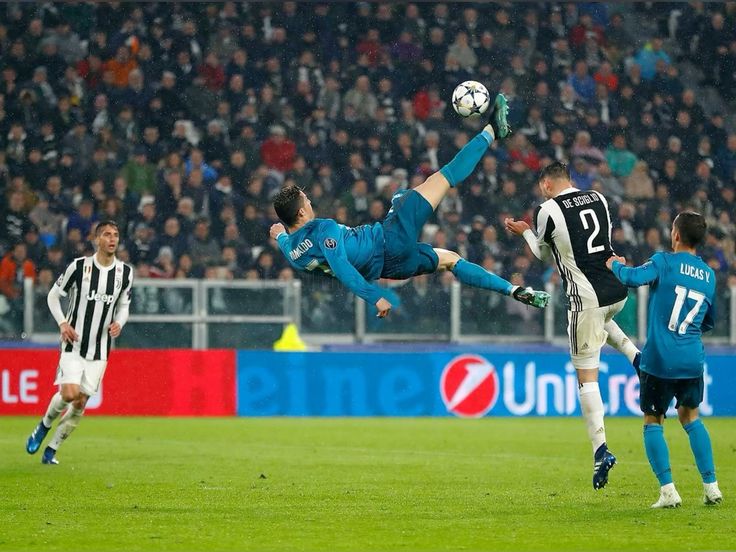
Cristiano Ronaldo scored a bicycle kick goal, 2018

  • On April 3, 2018, in the first leg of the UEFA Champions League quarter-finals at Allianz Stadium in Turin, Italy, Cristiano Ronaldo scored a bicycle kick goal against Juventus that stunned the world.

Quote

  • We are more inclined to believe those we like than those who speak the truth.

Why Does Chinese Football Keep Failing? The Real Problem Lies in a Systemic "Anti-Football Culture"

The failure of Chinese football isn’t due to a few underperforming players, nor is it solely the result of corruption or tactical shortcomings. The root cause lies deeper—in a systemic mismatch between the societal environment and the nature of football itself. We might call this an “anti-football culture”—not because people dislike football, but because the system fundamentally lacks the soil and mechanisms needed to nurture success in the sport.


1. The Football Population: It’s Not Just About Numbers

People often say, “China has 1.4 billion people—why can’t we find 11 good players?” This is a classic case of statistical illusion. The true “football population” isn’t defined by those who’ve kicked a ball once or twice, but by those who, from a young age, have received consistent, systematic training and remain engaged in competitive football.

  • Schools are closed off; there’s no room after class: Fear of injuries, liability concerns, and risk-averse administrators make football an expensive extracurricular luxury, not a norm.
  • Families are unsupportive: Parents often tell children, “Football has no future,” and even the passionate ones eventually yield to academic pressure.
  • There’s no social atmosphere: With intense work stress, scarce fields, and high costs, even football-loving adults have nowhere to play. The issue isn’t a lack of passion—it’s a lack of access.

So while it may seem like “everyone loves football,” the number of kids who can truly participate in a structured way is likely smaller than in a mid-sized European country.


2. Playing Football Is a Gamble, Not a Choice

Compared to Japan, Argentina, or even Iraq—three vastly different countries—Chinese kids face higher costs and greater uncertainty in pursuing football.

  • In Japan, football is a well-structured and socially recognized path. With a mature youth training system, players can pivot to other careers through education if they don’t make it professionally. Families and society support participation in sports.
  • In Argentina, despite chronic economic instability, football is deeply embedded in the national culture. Street fields are everywhere, and the ecosystem is fueled by talent and passion.
  • Even in war-torn Iraq, strong national identity and grassroots systems consistently produce national team players.

In China, pursuing football means abandoning the mainstream academic route, bearing high costs, and facing higher risks of failure. This turns football into a high-stakes gamble rather than a viable career path.


3. Players in the System Are “Tragic Winners”

Chinese national team players are, in some ways, the lucky few who’ve emerged from a brutal selection process. Yet they end up shouldering the blame for a broken system.

  • They are among the few who managed to “make it,” yet are blamed for collective failure.
  • They are the best the system could produce—and still can’t overcome structural shortcomings.
  • Their careers are shaped not only by the sport, but by public disappointment, ridicule, and pressure.

It’s a tragedy: these players represent the ceiling of the system’s capabilities, and in doing so, reveal the absurdity of that ceiling.


4. The Issue Isn’t Lack of Resources—It’s Misallocation

China isn’t short on funding or policies, but its investment strategy is severely misaligned with football’s natural development logic:

  • Football administrators are driven by political performance metrics, seeking short-term results rather than long-term cultivation.
  • Local governments pour money into image projects: building fields is easy, maintaining and operating them is hard.
  • Professional clubs offer sky-high salaries with little accountability, while grassroots training remains unsupported.

When opportunism, shortsightedness, and formalism dominate the development strategy, talent pipelines naturally narrow to a trickle.


5. The Deeper Problem: A Systemic “Anti-Football Culture”

At its core, China’s football problem isn’t about tactics or technique—it’s about a cultural and institutional environment that stifles the freedom and creativity football thrives on:

  • Football is a sport defined by unpredictability and imagination—it requires room for mistakes and tolerance for failure.
  • Our familiar system emphasizes standard answers, controlled outcomes, and punitive measures.
  • Football grows from the grassroots, from spontaneous participation—but China’s resources and attention are overwhelmingly focused at the top.

The problem isn’t that “we’re not good enough”—it’s that our systems and methods were never designed to foster football in the first place.


Conclusion: The Real Solution Is Systemic Reform, Not Slogans

Reviving Chinese football isn’t about winning one game—it’s about fundamentally rethinking how we understand and support the sport:

  1. Free up school football: Let kids play without everything being measured by test scores.
  2. Create accessible youth systems: Reduce financial barriers so more families can give it a try.
  3. Provide pathways for failure: Success in football shouldn’t only mean going pro.
  4. Foster a real football culture: Make playing football a natural, low-cost, low-risk part of life.

Only when football becomes something that “happens naturally,” rather than something that must be fought for tooth and nail, can Chinese football truly begin to rise.


Picture

Suárez bit Chiellini, 2014

  • During the 2014 FIFA World Cup group stage match between Uruguay and Italy, Uruguayan player Luis Suárez bit the shoulder of Italian player Giorgio Chiellini.

Quote

  • You do not rise to the level of your goals. You fall to the level of your systems.

Let’s See You Do Better! — A Full Guide to Classic Logical Fallacies on Football Forums

I used to watch debate competitions back in the day, and I realized that the point wasn’t always to arrive at the “truth.” More often, it was about sharpening your thinking, getting better at spotting flawed logic, and maybe stumbling upon ideas worth reflecting on after the debate ends. The real value lay not in the conclusion, but in the clash of ideas.

Unfortunately, whether it’s in formal debates or rowdy football forums, many so-called “mic drop” moments aren’t built on solid logic, but rather on quick wit and verbal gymnastics. They might win the crowd, but they’re riddled with fallacies. So today, let’s bring some of that slick forum banter into the light—and dissect the most common logical fallacies you’ll see on sports forums.


1. “Let’s See You Do Better!” – The Credential Fallacy

Typical lines:

  • “You don’t even have a C-level coaching license. Who are you to criticize Guardiola?”
  • “You just sit at home watching games. What do you know about tactics?”

Logical issue:
This is a classic ad hominem—attacking the person instead of addressing their argument. By dismissing someone’s opinion based on their credentials (or lack thereof), it dodges the real topic. If only certified coaches were allowed to discuss football, forums would be ghost towns.


2. “Either You’re With Us or Against Us!” – The Black-and-White Fallacy

Typical lines:

  • “If you think Mbappé played poorly today, you’re saying he’s overrated.”
  • “If you don’t support VAR, then you must be fine with bad calls.”

Logical issue:
This is a false dichotomy. The real world isn’t binary. You can think Mbappé had a bad game and still rate him highly. You can criticize VAR implementation without rejecting technology in football.


3. “Have a Heart!” – Emotional Blackmail

Typical lines:

  • “He’s only 18, how can you criticize him?”
  • “His wife just had a baby. Cut him some slack!”

Logical issue:
This is an appeal to emotion. While empathy is important, it shouldn’t replace rational analysis. Facts don’t disappear just because someone’s in a tough spot.


4. “But He’s Such a Good Person!” – The Red Herring

Typical lines:

  • “You say he can’t finish? He donates more to charity than any other player!”
  • “With his character, we shouldn’t be blaming him for a poor season.”

Logical issue:
This is a red herring—diverting attention from the topic. Being kind off the pitch doesn’t mean you’re immune to criticism on it. Character and performance aren’t mutually exclusive.


5. “So You’re Saying He’s Trash?” – The Straw Man

Typical lines:

  • “You said he can’t defend, so you’re saying he doesn’t deserve to be on the national team?”
  • “You questioned that penalty call, so you support foul play?”

Logical issue:
This is the straw man fallacy—misrepresenting someone’s argument to make it easier to attack. It feels like a win, but it’s just punching a fake opponent.


6. “Everyone’s Out to Get Us!” – The Conspiracy Theory

Typical lines:

  • “The ref was obviously paid off.”
  • “FIFA just doesn’t want us in the semi-finals.”

Logical issue:
This is conspiracy thinking—asserting shady motives without evidence. Yes, unfair calls happen. But assuming a global agenda against your team is a stretch.


7. “Everyone I Know Agrees” – Small Sample Fallacy

Typical lines:

  • “No one around me supports Real Madrid anymore. They’re clearly losing fans.”
  • “Everyone in my group chat says Ronaldo’s done. He should retire.”

Logical issue:
This is hasty generalization. Your local echo chamber doesn’t represent global opinion. Anecdotes aren’t statistics.


8. “Don’t Confuse Me with Facts!” – Confirmation Bias

Typical lines:

  • “I don’t care! I like him no matter what!”
  • “You can show me all the stats you want—I trust my eyes!”

Logical issue:
This is confirmation bias—cherry-picking info that fits your view and ignoring the rest. It’s not analysis, it’s emotional fandom.


9. “Once a Diver, Always a Diver” – The Fixed Timeline Fallacy

Typical lines:

  • “He faked injuries before, so he’s still doing it.”
  • “He sucked last season. Don’t expect anything this year either.”

Logical issue:
This assumes people can’t change—denying the possibility of growth or recovery. Players evolve. Form is temporary, after all.


10. “That One Time Proves Everything” – Overgeneralization

Typical lines:

  • “Messi didn’t console his opponent that one time—he’s got no sportsmanship.”
  • “Ronaldo cursed at a ref once. Terrible person.”

Logical issue:
This is overgeneralization. One-off incidents don’t define an entire character or career. Everyone has bad days.


So, Why Bother Debating at All?

Let’s go back to where we started: real debates aren’t about winning—they’re about exchanging ideas, testing logic, and expanding perspectives.

But in practice, most forum fights are just performance—logic shortcuts, emotional outbursts, and shouting matches disguised as discussions.

Football forums could be places of deeper thought, not just verbal brawls. Let’s aim for arguments that are thoughtful, not just loud; points that make people think, not just clap. That’s what true debate should be about.


Picture

Neymar's diving, 2018

  • In the 2018 World Cup group match between Brazil and Switzerland, Neymar drew controversy for his exaggerated falls.

Quote

  • The aim of argument, or of discussion, should not be victory, but progress.

Wang Yangming's Philosophy of the Mind: Cultivating a Bright Heart, Walking a Clear Path in Life

In life, the hardest thing is to truly know yourself. The second hardest? To firmly stay true to yourself. Wang Yangming, through a life of trials and reflection, left us with a guiding philosophy for both—what he called the learning of the mind (xin xue).

He said:
“The mind is principle itself.”
“Unity of knowledge and action.”
“Extend innate knowing.”

These are not obscure terms meant only for philosophers. They are three simple truths that any ordinary person can use to navigate life and emerge from confusion.


I. “The Mind Is Principle” — Truth Is Not External, But Within You

We often believe that truth must be sought outside: in books, from sages, or from fate itself. But Wang Yangming said, “The mind is principle.”

What does that mean? It means you already know, deep down, what is right and what is wrong. You feel anger when faced with injustice, and warmth when witnessing kindness—that is principle. It is not locked away in temples or scrolls, but alive in your heart.

This is an incredibly comforting idea:
You don’t need to become some “ideal person.”
You only need to return inward and see clearly the bright and upright self that’s already there.

Your heart already knows the way.


II. “Unity of Knowledge and Action” — Knowing Is Doing

Many people understand a lot of principles, yet still live unfulfilled lives. Why? Because knowing alone is not enough.

Wang Yangming tells us, “To know but not to act is not truly to know.”

It’s like this:
You know honesty is good, yet still lie.
You know health matters, but still stay up late.
Then you don’t really know it.

True knowledge is action made flesh.
Knowing and doing are not two things—they are one.

This isn’t about perfection. It’s a reminder that every small act is part of true cultivation.


III. “Extend Innate Knowing” — Listen to the Gentle Yet Firm Voice Within

Innate knowing is your most authentic inner compass. It’s the voice that gently rebukes you when you’ve done wrong, and quietly rejoices when you’ve done right.

To “extend innate knowing” is to continually live as the person your heart already knows you should be.

You don’t need to compare yourself to others or meet their expectations. Just ask yourself:
“Is this the right thing in my heart?”
Not what benefits you.
Not what others think is right.
But what brings you peace.

To extend innate knowing is to spend your life walking toward your most genuine self.


IV. “There Is Nothing Beyond the Mind” — The World Is a Reflection of the Heart

Wang Yangming also said: “There is nothing in the world outside the mind; there is no principle outside the mind.”

The chaos of the world is often a projection of the chaos within.
You feel restless because your heart is unsettled.
You feel fear because your heart is unanchored.

But when your mind is clear, the world becomes gentle.

We can’t control the storms—but we can train the hand that steers the boat.
No matter how loud the world becomes, you can stand like a lotus in the mud—untouched—because you know:
Real strength comes from within.


V. The Philosophy of Wang Yangming: The Best Path of Cultivation in Life

Wang Yangming was not an armchair scholar. He was a man who endured exile, war, and failure. His philosophy wasn’t born from theory, but from life itself.

When you hit a low point in life, remember these three phrases:

  • “The mind is principle”: Trust your inner judgment—no need to seek outside.
  • “Unity of knowledge and action”: Don’t stop at knowing—let your actions shape your life.
  • “Extend innate knowing”: Live with integrity, and your heart will be at peace.

True cultivation is not about escaping the world, but slowly polishing your heart through everyday life.


Conclusion

The world may be vast, but the greatest challenge is still mastering your own heart.
The path may be long, but it begins with each small moment of knowing and doing.

May the wisdom of Wang Yangming help you rediscover your truest self,
and walk steadfast toward a life of clarity and light.

Picture

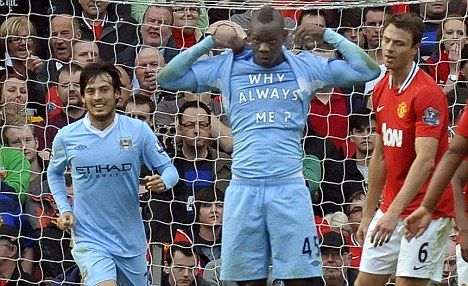
Why Always Me ?

  • On October 23, 2011, during a Premier League match between Manchester United and Manchester City, Mario Balotelli lifted his jersey after scoring to reveal the message “Why Always Me?”, mocking the media’s constant focus on his controversies and creating an iconic celebration.

Quote

  • Know thyself.

The World Is a Giant Probability System

Almost every decision and outcome in our lives is not determined by certainty, but by probability. From the tiniest personal choices to sweeping societal shifts, what happens is rarely absolute—rather, it’s governed by likelihoods. Success, failure, and everything in between can often be traced back to how we navigate and interact with probabilities.


Individual Success Doesn’t Prove Systemic Superiority

In the fields of technological innovation, scientific breakthroughs, or business achievements, we often see certain standout successes being interpreted as signs of systemic excellence. But from a probabilistic perspective, these are often “low-frequency, high-visibility” events. In other words:

Even if a system is inefficient or lacks supportive mechanisms, a remarkable success can still occasionally emerge—just by chance.

This doesn’t indicate a superior system; it’s simply the natural variance of probability. Just like a flawed garden can still produce a beautiful flower, a breakthrough may appear in a suboptimal environment. Respecting such achievements is valid—but using them as evidence of broad systemic advancement is analytically weak. A more rational approach would consider how often these successes occur, whether they are replicable, and how the talent pipeline functions.


Everyday Decisions Are Also Probabilistic

Even the decision to leave your house today involves probability. You know there’s a tiny chance you might get into an accident, but you also know there’s a much higher chance you’ll earn a living, meet people, or pursue opportunities. You’re not seeking perfect safety—you’re balancing:

  • High-probability gains (work, experience, connection)
  • Against low-probability risks (accidents or rare events)

Humans have survived and thrived not because we avoid all risk, but because we intuitively weigh risks and rewards, and move forward despite uncertainty.


Filtering Mechanisms: Using Probability to Enhance Efficiency

In hiring, admissions, or investment selection, people often set thresholds—such as academic qualifications, experience levels, or track records. While this may seem exclusionary, it’s actually a method of probabilistic optimization. For example:

Statistical patterns suggest that candidates with certain backgrounds are more likely to meet performance expectations.

It doesn’t mean others are incapable—just that the chance of success is higher within that filtered group. Given limited time and resources, decision-makers accept the risk of overlooking some exceptional individuals in order to maximize efficiency. Like an algorithmic news feed that might miss gems but still improves overall relevance, these filters are imperfect, but pragmatic.


Investment and Risk: It’s All About Probabilistic Balance

The saying “high risk, high return” is well known—but it’s only part of the truth. What really matters is the probability of achieving that high return. Many people see others get rich from speculative ventures and jump in, forgetting that:

Most of those stories are survivor bias—we see the winners, but not the countless losers.

Understanding probability in investing means:

  • Diversifying and controlling position sizes
  • Accepting failure as part of the game
  • Playing a long-term, multi-round strategy

The most dangerous investors are those who confuse luck with strategy. Rational ones treat every opportunity as a probability event, not a guarantee.


The Danger of Extrapolating from Extremes

Probability thinking is often undermined by our emotional attraction to extreme events. We love stories of dramatic success or failure and try to extract universal truths from them. But the truth is:

An extraordinary case—whether a wild success or tragic failure—doesn’t represent the whole picture.

Rational debate should rely on comprehensive data, large sample sizes, and understanding of context. Not on anecdotes or outliers. It’s intellectually lazy—and often misleading—to generalize from one data point, no matter how compelling the story.


Of Course, Sometimes Irrational Belief Has Its Place

It’s worth acknowledging that in certain scenarios, believing in the improbable can have emotional or motivational value. When someone is in a dark place, even a 1% chance can inspire hope. At the collective level, optimism—however unrealistic—can provide cohesion and momentum.

So yes, “irrational” belief has social utility. But it should be recognized for what it is: a short-term emotional tool, not a foundation for long-term planning or policymaking.


In Conclusion: Embracing Probability Is a Mark of Maturity

Those who understand probability are more accepting of uncertainty, more tolerant of failure, and less likely to swing between extremes of optimism and despair. They see success not as proof of destiny, and failure not as doom, but as part of a broader, probabilistic dance.

There are no certainties—only likelihoods, distributions, and statistical tendencies.

Strength doesn’t lie in denying randomness. It lies in understanding, navigating, and working with randomness.


Picture

Robin van Persie Volley, 2013

  • On April 22, 2013, at Old Trafford, Wayne Rooney delivered a precise long pass from midfield, and Robin van Persie met it with a stunning first-time volley to score. Manchester United eventually defeated Aston Villa 3-0 in that match, with Van Persie netting a hat-trick. This victory secured the Premier League title for the 2012–13 season — the final league championship of Sir Alex Ferguson’s managerial career at Manchester United.

Quote

  • The world is not governed by certainty, but by probability.

Why Do We Always Miss the Past? — On Memory, Time, and the Psychology of Self

I. Introduction: The Paradox of Nostalgia

The human brain has a curious tendency: at an age when we should be looking forward, we often find ourselves looking back. People in their twenties and thirties frequently say, “Those were the good times,” even if those times weren’t perfect.

This nostalgia isn’t a random emotion—it’s a complex psychological phenomenon involving memory mechanisms, identity construction, time perception, and existential anxiety. Understanding this process offers not only a clearer view of ourselves but also a deeper glimpse into what it means to be human.


II. How the Brain Processes Time and Memory

1. Memory Is Reconstructed, Not Recorded

  • Neuroscience confirms that memory is not a perfect recording system. Instead, every act of recall is a reconstruction, influenced by our current emotions, needs, and mental state.
  • This allows the brain to emotionally process and reshape memories—especially when the present is stressful or unsatisfying, the past is reimagined as a “safe haven.”

2. The “Reminiscence Bump” and Youth Memory Bias

  • Studies show that the most vivid and frequently recalled memories cluster around the ages of 15 to 25, known as the reminiscence bump.
  • During this period, the brain is most active in learning and emotional encoding, forming strong impressions through a series of “firsts”: first love, graduation, failure, dreams—all of which shape personal identity.

III. The Psychological Functions of Nostalgia: Emotion and Identity

1. A Tool for Emotional Regulation

  • When life feels uncertain—such as during early adulthood transitions—nostalgia activates automatically to restore emotional balance.
  • Research shows that people who feel socially excluded or overwhelmed tend to become nostalgic as a way to reconnect with a sense of belonging and self-worth.

2. Building a Coherent Sense of Self

  • Humans don’t merely live in the present—we structure life through a sense of temporal continuity. Nostalgia affirms the narrative that “I am still me, shaped by what I’ve been.”
  • Philosopher Charles Taylor refers to this as narrative identity: we make sense of who we are by telling the story of our past.

IV. Nostalgia and the Awareness of Time

1. Humans Are the Only Beings That Reflect on Time

  • Unlike animals, humans possess future projection and past reflection, creating a tension between memory and anticipation.
  • Nostalgia arises from this tension. When the future feels uncertain or disappointing, the past becomes a source of stability and emotional refuge.

2. A Response to Existential Loss

  • Nostalgia is not just about longing for happy times—it reflects an awareness of irreversible change: youth fades, relationships shift, possibilities narrow.
  • This is a form of temporal melancholy—a grief for what can never return.
  • Thus, nostalgia becomes a way to affirm the meaning and coherence of our existence, a quiet resistance to the void of meaninglessness.

V. A Philosophical View: How to Remember Without Escaping

Nostalgia is evidence of our humanity. But when indulged too often, it becomes a refuge from growth. True maturity lies not in avoiding memory, but in carrying it forward with us into the future.

As novelist Haruki Murakami once wrote:

“It’s not the nostalgia that hurts—it’s the realization that the person we were back then is no longer reachable.”


VI. Conclusion: Nostalgia as a Gentle Resistance to Time

We long for the past not because we are weak, but because in the face of complexity and chaos, we seek emotional continuity. Nostalgia reminds us that:

We were here. We loved. We lived. And we are still becoming whole.


Picture

Zlatan Ibrahimović Bicycle Kick, 2012

  • On November 14, 2012, during a friendly match against England in Stockholm, Zlatan Ibrahimović scored his fourth goal of the night with an astonishing 30-yard overhead kick.

Quote

  • To live is the rarest thing in the world. Most people exist, that is all.