When Did We Start Seeing Life Again Amid Our Career Hustle?

After years of intense striving and being consumed by anxiety, many of us come to a sudden realization:
We haven’t truly lived in a long time.

Someone once said:
“These past few years, work was so busy that I didn’t have the energy to take photos, let alone record anything. Now that I’m older and my career has plateaued, I’ve finally started documenting life again. Maybe it’s compromise, or maybe it’s reconciliation with myself.”

This sentiment isn’t rare—it’s a shared awakening for many in the middle chapters of life.
Shifting from career obsession to noticing life’s details isn’t a sign of defeat, but rather an internal loosening, a transition from anxiety to clarity.


1. From “Chasing Career” to “Recording Life”: A Shift in Mindset

In our youth, time felt like a scarce resource. Every minute had to be used for “progress” or “proving ourselves.”
Things like taking photos, going for walks, daydreaming, or journaling were dismissed as “wasting time.”

But as we mature and our careers stabilize—or when we realize this might be as far as it goes—we finally allow ourselves to slow down and look back at our own lives.
This isn’t compromise. It’s awakening.

Documenting life isn’t a consolation prize for failure—it’s an invitation to meet your true self.


2. Experiencing Life Isn’t Opposed to Ambition—It’s a Matter of Balance

Many people believe that pursuing a career and enjoying life are mutually exclusive—that pouring yourself into work means sacrificing quality of life, and savoring life means giving up ambition.
This is a misleading zero-sum mindset.

In truth, the two aren’t in conflict. The conflict lies in our unbalanced mental state when we’re running too fast.

  • It’s not the scenery that distracts the runner—it’s the runner who forgets to look;
  • It’s not effort that strips away our sensitivity—it’s anxiety redefining what effort means.

In other words, you absolutely can chase dreams passionately and live attentively at the same time.
You can be scribbling away late at night and still capture the golden light of dusk in a photo.
You can listen to work podcasts on your commute and still allow yourself a few minutes to daydream.

Career is part of life. Experience is its texture. You don’t need to sacrifice one for the other.


3. The Meaning of Recording: Turning Process into Presence

Recording life isn’t about showing off or gaining attention.
It’s a way to respond to yourself.
It’s a gentle reminder: You existed—authentically—on this earth.

Beyond memory, it brings deeper meanings:

  • Regaining control – When you can’t control your career highs and lows, you can still choose what to capture and how to interpret each day.
  • Enhancing presence – Even a ray of light, a cup of tea, or a short evening walk becomes real and meaningful once it’s recorded.
  • Comfort for your future self – In tough times, flipping through fragments of past moments reminds you that you were achieving something—you just moved too fast to notice.

4. A Message to You: Slowing Down Isn’t Failure

“That’s just how my career turned out” — this phrase may sound resigned, but it holds wisdom too:
You’ve finally stopped using anxiety as your sole source of momentum.

You’ve learned to set boundaries, to know when to pause and when to take care of yourself.
This isn’t passivity—it’s a mature way of cherishing the present.

Stop chasing “not good enough.”
You’re already doing well.


5. You’re Not Recording for Others, But for the You Who Was Overlooked

Many resist documenting their lives because they feel it’s too plain or worry others will think they’re showing off.
But what really matters is:
Can you find strength or comfort in these fragments?

Recording is a form of self-healing.
It’s a tender way of saying to yourself:
“You’ve come this far, and even if no one sees it, I do—and I’ll remember it.”


In Summary

Life’s constant rush once made us forget how to live.
But recording helps us reconnect with ourselves.
It’s not a reluctant compromise—it’s a conscious, mature choice.

Career and life experience have never been enemies.
If you’re willing to shift your mindset—bringing your ability to feel back into the everyday and letting your real self set the pace—
Life can still be gentle, rich, and full of strength.

You don’t start recording because life suddenly got better.
You start because you finally decided to treat it—and yourself—with softness.


Picture
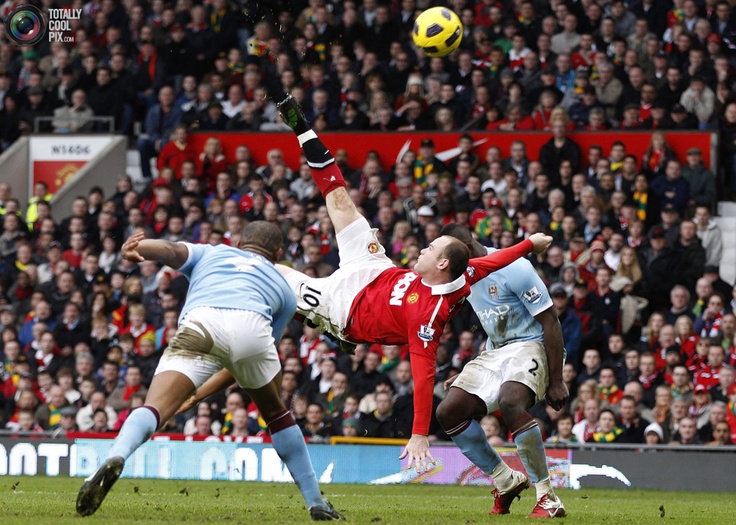
Wayne Rooney scored a stunning overhead kick against Manchester City, 2011

  • On February 12, 2011, Manchester United’s Wayne Rooney scored a stunning overhead kick against Manchester City at Old Trafford, widely regarded as one of the greatest goals in Premier League history.

Quote

  • We write to taste life twice, in the moment and in retrospect.
The Corporate Zoo

In a tropical rainforest of technology, constructed from glass curtain walls and slogan banners, lived a group of peculiar creatures. They were known as “Efficiency Animals,” bred to generate virtual value for the “Vision Farm.” They had no names, only IDs: Developer Ape 101, Operations Goose 203, Design Fox 309, Data Bear 417…

Their daily ritual began at 9 a.m. and ended at midnight. They inhabited an ecosystem rich in “bullshit tasks,” where the greatest challenge wasn’t the work itself, but pretending to be “extremely busy.”

The zoo always championed “creativity,” but in a very local form: transforming once-inspired, intellectual labor into meticulously segmented, labor-intensive time blocks. Creative writing? It was broken into “polishing,” “templating,” “client-speak alignment,” “leader pre-review,” “secondary review,” and “review meeting summary.” Every step required a timestamp, screenshot, and submission before it could be closed. What once took two hours of genuine inspiration now stretched into a full week’s “burn down chart.”

The totem of this zoo? Overpopulation. Labor overflowed. Every year, millions of interns rushed into the zoo, chasing a meal stipend and a résumé adorned with a prestigious company logo. They traded cost-effectiveness for lunch and sold their time for KPIs.

Individuality was outlawed in the zoo. Smart with opinions? Dangerous. Quiet but capable? Not team-oriented. Only the obedient, submissive, and unquestioning survived. The management handbook explicitly stated: “Avoid expressing unnecessary thoughts,” lest you disrupt the team atmosphere and shake the foundations of the sacred “grind.”

Here, a popular evolutionary trait had emerged: the “high EQ, dead-eyed smile.” Animals learned to maintain a professional grin in meetings, nodding while their souls faded. They understood that recognition came not from competence, but from “emotional management,” relentless overtime, and the sacred art of silence.

At the top of the pyramid stood a different breed. These creatures seemed to possess freedom, privilege, and halos. But in the private shadows, many knew that reaching such heights required countless sacrifices of dignity and honesty. Hypocrisy was the passport; compromise was the gate. Many had once tried to hold their principles—until they were sidelined and isolated. Eventually, they too chose the path with the brightest prospects.

“We are the vanguard of innovation! The model workers of struggle!” roared the Tiger Leader at the year-end gala, his voice echoing through the zoo via a state-of-the-art sound system. “As long as you grind hard enough, the future is yours!”

Thunderous applause followed. The efficiency animals chanted slogans in unison, as if they had truly seen the gate to freedom. But more of them knew it was just a display board reading “Hard work changes destiny,” behind which stood a wall of reinforced concrete.

One day, a newly arrived intern Chimpanzee timidly asked, “Why are we always doing such meaningless tasks?” A Squirrel colleague whispered back, “These aren’t tasks. They’re rituals of faith.”

The intern fell silent. He began to work overtime, obey orders, smile, and quickly read the room in meetings. Soon, he was fully assimilated, seamlessly integrated into the system.

But one late night, under the cold lights of the zoo, an old HR Chimpanzee—ID 000—was leaning on the rooftop, puffing on an e-cigarette. He had been among the zoo’s earliest inhabitants. Now, he was tasked with “onboarding welcome speeches.” He said, “Back then, I wanted to change the world. But the world changed me. Now, I teach young animals how to play dumb.”

He pointed toward a distant building draped with a “Tech for Good” banner and said, “See that? Every floor has lights on. They’re grinding through the night, thinking freedom waits at the top. But the rooftop’s already crowded—with people smiling, who’ve long stopped climbing or even looking down.”

“What will you do then?” the intern asked softly.

The old chimp smiled and bit into a cold steamed bun. “Wait for retirement, I guess. What else is there? Our kind—waking up won’t save us.”

At 5 a.m., the zoo’s speakers blared once more: “A new day begins—may your dreams carry you forward and your feet stay grounded.” The animals rubbed their eyes and shuffled back into their cubicles, chasing a future that never arrived.

There was no zoo. The entire society was a nationwide examination room in ecological disguise. Only the disobedient ones—the ones who still dared to think—ever noticed they were caged.

Picture

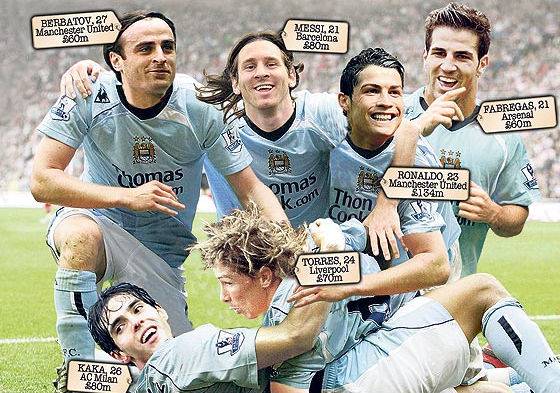
Manchester_City_Superstar_Policy

  • On September 1, 2008, after Manchester City was acquired by the Abu Dhabi United Group, the club began making high-profile signings and implemented a strategy to build a world-class team.

Quote

  • The price of fitting in is the death of the self.

Icons, Belief, and the Ideal Self

When we’re young, we love to talk about our idols. T-Mac, Kaká, Curry, Messi, Henry… the ones who shone bright on the court or field. They ran faster, jumped higher, showed unshakable will and stunning skills. To me, they were the reflection of the kind of person I hoped to become.

But as time passed, I started to realize something important: an idol is just an idol—they are not me. I used to hope T-Mac would rise again after injuries, dreamed of Kaká returning to his AC Milan glory days. When they didn’t, I felt disappointed, even sad. It was like my emotions were tied to someone I had no influence over. I remember the Warriors’ 73-win season ending in a heartbreaking Finals loss. That emptiness lingered way too long. But now I realize how absurd it was. Letting my emotions be controlled by something I had zero control over? That’s not passion—that’s foolishness.

An idol, in essence, is just the embodiment of values we resonate with. They’re not the real person with all their complexities. They’re just a symbol—a snapshot of who we wish we could become. That doesn’t change even if their career declines or their reputation fades.

Take Lu Xun, for example. Some people adore him, others criticize him. But truth is, we all admire different versions of him—what he stood for in our own minds. If someone insults him, they might not even be attacking the version you admire. We aren’t drawn to the person, we’re drawn to the values they represent—values that mirror something within ourselves.

That’s the key: It was never about them. It was always about us.


We’re not meant to become someone else. We’re meant to become who we want to be.

And that’s when the power of the mind comes into play. Your mindset shapes everything. It’s not just motivational fluff—it’s real. When you believe in yourself, you take the first step. When you don’t, you never even try.

As Gandhi put it:
Beliefs become thoughts, thoughts become words, words become actions, actions become habits, habits become values, values become destiny.

So create a vision in your mind: “This is the person I want to be.” Imagine walking, talking, and acting like that version of yourself. Pretend you already are that person, and live like it. Bit by bit, you’ll start to become that person.


Someday, when your journey is near its end and you look back at your life, the biggest regret would be not becoming your true self. The idols you once admired? They were just lighthouses—they showed the way, but you had to take the steps yourself.

Don’t worry about whether others like your idols, or if those idols fall from grace. Because what you truly admired wasn’t them, it was the light they stood for.

Idols can be a beginning. They can be a spark. But in the end, it’s your fire that has to burn.


Picture

Messi, Suarez, Neymar Trio, 2015

  • That year, MSN were in their prime — a symbol of the golden age of football and its timeless romance.

Quote

  • Knowing yourself is the beginning of all wisdom.