Why Do Some People Enjoy Visiting Ancient Tombs?

In popular imagination, cemeteries are often associated with fear, gloom, or the supernatural. They are seen as places to avoid. Yet, in reality, many people are fascinated by ancient tombs, mausoleums, and epitaphs, even embarking on what could be called “tomb tourism.” Sites such as the Mausoleum of the First Qin Emperor, the Ming Tombs, the Cemetery of Confucius, and the Tomb of Yue Fei attract millions of visitors every year.

Why would anyone not only feel unafraid of such “houses of the dead,” but actually enjoy them? Far from being a morbid obsession, this reflects a deeper human engagement with history, mortality, mystery, and self-reflection. Let’s break it down into several main reasons:


1. Reverence for History and the Pursuit of the Past

For many, tombs are not merely burial sites but tangible relics of history.

  • Tombs are time capsules: The resting places of emperors, poets, generals, and thinkers often embody the aesthetics, beliefs, and social order of their age.
  • “Tomb equals history”: Long before cameras or the internet, epitaphs, funerary objects, and burial structures served as invaluable first-hand records of past civilizations.
  • For history enthusiasts, a tomb is a portal into another world—an archaeological gateway into human memory.

→ They are not looking at “a grave,” but at evidence of history.


2. Philosophical Interest in Death and the Meaning of Life

Others step into cemeteries because they are compelled by the ultimate question: death.

  • Standing before a gravestone, one naturally wonders: What endures after a life ends? Fame? Deeds? Silence?
  • Philosophers such as Heidegger insisted that “to face death is the first step toward authentic life.”
  • For reflective or artistic personalities, cemeteries become spaces for existential contemplation—where the brevity and value of life become clearer.

→ They are not staring at “death,” but seeking the meaning of life.


3. Curiosity About the Mysterious and the Unknown

Ancient tombs often carry an aura of mystery—especially imperial mausoleums, undeciphered epitaphs, unusual chamber designs, or vanished civilizations.

  • Tomb exploration feels like an adventure, a step beyond ordinary boundaries.
  • Even skeptics who dismiss ghosts may be drawn to the atmosphere of the “underground world.”
  • This is also why tomb-raiding novels and archaeological adventure films remain popular: they blend thrill, mystery, history, and the boundary of life and death into one irresistible experience.

→ They are not looking at “remains,” but at the unknown world.


4. Personality Traits: Calm, Reflective, and Comfortable With Solitude

From a psychological perspective, people who enjoy visiting tombs often share certain traits:

  • Low fear response: Their minds are less prone to panic when confronted with death or the eerie.
  • Reflective temperament: They tend to turn inward, using such places as triggers for thought.
  • Tolerance for solitude: They do not find cemeteries lonely; rather, they experience them as tranquil.

For such individuals, a cemetery is not threatening but a special, accessible space outside daily routine.


5. Emotional Connection: Remembrance and Respect for the Departed

When visiting the tombs of famous figures—such as Yue Fei, Confucius, Li Bai, or Lin Zexu—people often feel not horror, but reverence.

  • “Standing where he rests, I sense his aspirations and regrets.”
  • “I am not visiting a grave, but a spirit.”

Through this lens, a tomb becomes more than a burial—it transforms into a carrier of cultural memory and a site of collective remembrance.


Summary: A Cemetery Visit Is a Spiritual Journey, Not a Morbid Fixation

Liking ancient tombs is not about enjoying the macabre. It is about entering different dimensions of human experience:

Motivation Type Key Meaning
Historical Interest Tombs as living history, culture, and art
Philosophical Inquiry Cemeteries as spaces to reflect on mortality and meaning
Curiosity & Adventure Tombs as gateways to mystery and the unknown
Personality Traits Calm, introspective, solitude-tolerant
Emotional Reverence Respect and remembrance for great figures

For those drawn to them, tombs are not terrifying but offer a unique spiritual journey—a dialogue with time, mortality, and civilization itself.


Final Reflection

To some, a cemetery represents fear. To others, it embodies:

  • a historical relic,
  • a philosophical mirror,
  • a boundary of mystery,
  • a shelter for reflection,
  • a shrine of cultural memory.

Thus, the interest in ancient tombs reflects not morbidity but maturity—a willingness to face time, death, and heritage without denial.

Just as some find meaning in stargazing or ruins, others find it among tombstones. In the end, we are all trying, in our own ways, to understand ourselves, the past, and our destiny.


Picture
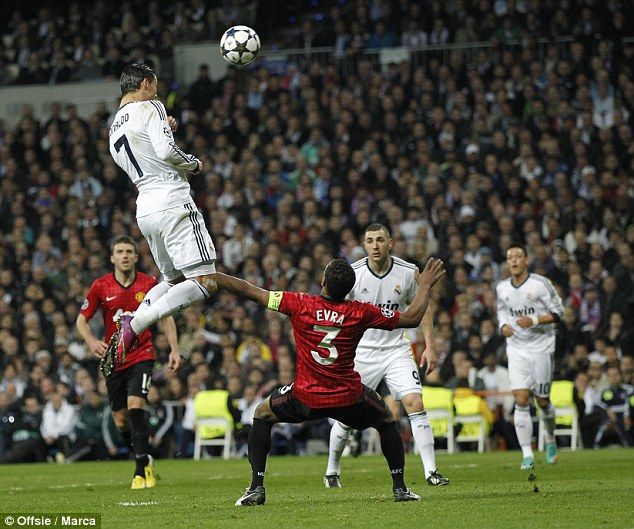
Cristiano Ronaldo leapt high to score a header, 2013

  • On February 13, 2013, in the first leg of the UEFA Champions League Round of 16, Cristiano Ronaldo leapt high to score a header against his former club Manchester United at Real Madrid’s home ground.

Quote

  • To philosophize is to learn how to die.

Death: The Inevitable Termination of Consciousness and Humanity’s Futile Resistance

Death is the unavoidable endpoint of life. From a biological standpoint, it is the irreversible cessation of systemic function. From the standpoint of consciousness, it is the eternal disappearance of self-awareness, perception, and being. On the scale of the cosmos, an individual’s death is neither special nor significant—merely a local collapse of informational order. Yet to humans, it is the ultimate and inescapable problem, as it marks the boundary of subjective experience.


1. The Nature of Death: The Break in Consciousness

We are used to defining death biologically, but that’s not the true source of human fear. One does not panic at the phrase “cardiac arrest.” What causes anxiety is the knowledge that such an event marks the end of the “self.”

Death cannot be felt, because feeling requires consciousness—and consciousness ends with death. Thus we arrive at a stark conclusion:

Death is not an experience, but the absence of all experience.
It is not a painful state; it is the total absence of any state. Therefore, “the feeling of death” is a blank space in language and cognition—an imagination of the living, not the lived reality of the dead.


2. Why Humans Fear Death: A Product of Evolution and Neural Architecture

From an evolutionary perspective, fear of death is a survival mechanism. Organisms that lacked this fear would not avoid danger, and would be quickly eliminated through natural selection. Fear of death, embedded deep within neural circuits, is an automatic reaction.

But in modern humans, this reaction has become disproportionate and inescapable. We know we will die, yet we cannot know when or how. We possess self-awareness, yet this awareness cannot protect us from its own termination.

This is the paradox of death anxiety: we know the end exists, yet cannot experience or resolve it.


3. Obsession and Meaning: Is Love, Family, or Career Merely a Strategy for Avoiding Death?

Many people claim they “live for” family, love, career, or faith. On the surface, these are noble motives. But viewed through the lens of evolutionary psychology and neuroscience, the picture grows more complicated:

  • Attachment and love activate survival-oriented dependency systems.
  • Career and faith stimulate reward circuits, offering positive feedback that “I am still alive.”
  • Obsession with meaning may not be about external values, but a disguised expression of the fear of death.

In short, what we call “love” or “faith” may not be free choices but neurological expressions of survival programming, wrapped in emotional and cultural language. We cling to certain values not necessarily because they are real, but because they allow us to forget death—or to feel that living is still “worth it.”
This doesn’t invalidate such emotions, but it reframes them as strategies, not metaphysical truths.


4. The Collapse of Meaning: Death Terminates All Narratives

If death is the end of consciousness, then it also marks the collapse of meaning. “The meaning of life” becomes void the moment the subject ceases to perceive or recall it.

Religious and metaphysical stories (heaven, reincarnation, soul) are attempts to buffer against this void. Their psychological function is to sustain the illusion of continued existence beyond awareness.

From a materialist perspective, this leads to a rational assertion:

Death not only ends life but dismantles the narrative scaffolding of meaning.


5. To Live Freely Despite Death: Divine Perspective or Neural Reconfiguration?

Some people, after fully confronting the reality of death, choose to live on their own terms—no longer driven by social norms, biological imperatives, or external validation.
Is this freedom from the genetic script—a kind of divine, godlike awareness?

Superficially, yes. Choosing not to have children, reject careerist goals, or defy emotional dependencies seems like liberation. But from a cooler perspective, these behaviors may still originate within reward systems of the brain.

Even the decision to “do what I like” is shaped by chemical feedback loops that define “liking.”

Free will, if it exists, has never been proven. Even if it does, it may still function within the limits of our neural architecture.

Thus, “freedom” and “programming” are not opposites but points on a continuum. Autonomy may merely be the brain translating instinct into complex language.


6. Strategies to Resist Death: Cultural Myths and Technological Delusions

Throughout history, humans have developed various strategies to resist death:

  1. Religious Narratives – promise an afterlife
  2. Cultural Memory – strive to leave a legacy
  3. Biological Reproduction – continue a version of the self
  4. Digital Uploads – fantasies of mind preservation
  5. Cryonics – hope in technological resurrection

Yet none of these truly solve the core issue:

Consciousness, once ceased, cannot be restored.

Even if memory is copied, behavior replicated, or image preserved, these are shadows—not the self.
Science and culture, at best, delay or distort death; they do not negate it.


7. Acceptance: The Only Rational Stance Toward Death

Stripped of illusions, humanity has one truly rational option in facing death: acceptance.

Acceptance is not celebration. It is not poetic romanticism. It is simply acknowledgment: death is unchangeable and needs no justification. It is not malicious, not meaningful, and not negotiable.

Hence, the real question becomes:

Given the certainty of death, which actions are still worth executing?
Not a moral query, but a problem of allocation—of time, energy, and cognitive resources.


Conclusion: To Exist Calmly in the Shadow of an Inevitable End

Death is neither enemy nor friend. It does not respond to our emotions, nor recognize our thoughts. It is the final state, and it is irrevocable.

The only lucid human response is to see it, accept it, and live accordingly—without illusions and without poetic escape.

Death is cold, but clear. Humanity is futile, but need not be blind.


Picture

Sergio Agüero scored a dramatic winner against QPR, 2012

  • On May 13, 2012, Manchester City striker Sergio Agüero scored a dramatic winner against QPR in the 93rd minute and 20th second, securing a 3-2 comeback victory and delivering City’s first top-flight league title in 44 years. This iconic moment became one of the most legendary title-clinching goals in Premier League history, known as the “93:20 Miracle.”

Quote

  • The fear of death follows from the fear of life. A man who lives fully is prepared to die at any time.