Analysis of Common Entoptic Phenomena
In everyday life, the human visual system can produce a range of self-generated visual phenomena, often arising from the structure of the eye or spontaneous neural activity. These occurrences are typically more pronounced under specific conditions and generally represent normal physiological responses. Here are several well-documented examples:
1. Floaters
Floaters appear as small, drifting specks, lines, or web-like structures within the visual field. They are primarily caused by microscopic fibers or debris within the vitreous humor of the eye. As light passes through the eye, these particles cast shadows on the retina, creating the characteristic “floating” effect. This phenomenon is often more noticeable against bright, uniform backgrounds.
2. Blue Field Entoptic Phenomenon
When gazing at a clear blue sky, one may notice small, rapidly moving white dots in the visual field. This is due to white blood cells flowing through the retinal capillaries, temporarily blocking some blue light as it passes through. This effect is usually only visible under specific lighting conditions.
3. Purkinje Tree Phenomenon
In dark environments, a brief flash of bright light directed at the eye can reveal a branching, tree-like pattern. This pattern represents the shadows cast by the blood vessels of the retina, which are normally invisible but become momentarily illuminated by the intense light.
4. Phosphenes
Phosphenes are spontaneous flashes, spots, or complex patterns of light that can be perceived when the eyes are closed or gently pressed. These phenomena arise from spontaneous electrical activity in the retinal cells or the visual cortex and are often more prominent in complete darkness.
5. Visual Snow Syndrome
Visual snow is characterized by the persistent perception of fine, flickering dots across the entire visual field, similar to the static seen on an analog television screen. Unlike typical entoptic phenomena, this condition may be linked to atypical neural processing in the brain, though its precise mechanism remains unclear.
6. Foveal Fixation
When focusing intently on a central point, certain visual artifacts may appear to remain stationary within the field of vision. This is due to the high concentration of photoreceptor cells in the fovea, the part of the retina responsible for the most acute visual detail.
7. Perception of Microscopic Structures
Under certain lighting conditions, some individuals can perceive minute granules or textures on the surface of the eye, such as the cornea or tear film. This effect is caused by light scattering off these microscopic structures.
Conclusion
These phenomena reflect the complex and highly sensitive nature of the human visual system. Understanding these effects can provide valuable insights into the underlying mechanisms of human perception.
Picture
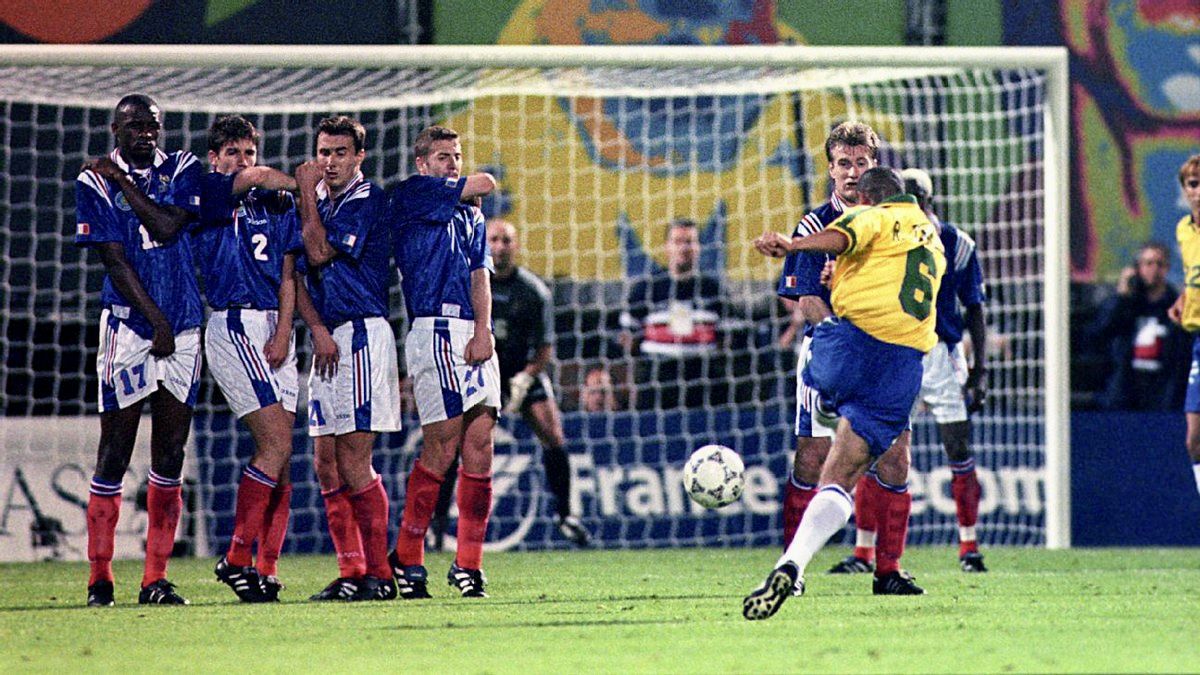
- In the 1997 Tournoi de France, Brazilian star Roberto Carlos scored his famous “physics-defying” free kick against France in Lyon.
Quote
- We do not see things as they are, we see them as we are.