Meaningless Exhaustion: How a Society Falls into Consumptive Competition

On this land, at once familiar and alien, people have long since learned how to run—yet forgotten why they ever started.

College entrance exams, job hunts, endless overtime, a flood of certificates and qualifications… these are the daily rhythms of our lives, collectively known as “involution.” On the surface, they seem to measure competence, but in truth, they drain individual energy. More cruelly, they consume not only time and physical strength, but also one’s passion for life and impulse to create.

The term “consumptive competition” is neither elegant nor noble. It lacks the halo of “striving” and “ambition,” and instead sounds dim, even bleak. It doesn’t describe the opening of upward mobility, but the spread of survival anxiety; not a necessary path to an ideal society, but a systemic trap into which we’ve collectively fallen.

This form of competition is the maintenance of an illusion. Like someone standing up in a movie theater to see better—forcing those behind to stand too—eventually everyone is standing, yet no one sees any farther. The unequal distribution of resources and the scarcity of upward paths compel individuals to prove themselves “worthy of selection” through increasingly intense, formalized competition. But this process of proof creates no new value. It only repeats, mimics, dissipates—grinding down people’s potential and willpower, round after round.

This isn’t the fault of individuals. No one is born loving involution, just as no one longs to be trapped on a treadmill. The problem lies in a system obsessed with metrics, fixated on quantifiable performance, and addicted to “stable outcomes.” Thus, education becomes a testing machine, work becomes a pile of assessments, time is filled to the brim—while the soul is gradually hollowed out.

Some say this is a helpless choice, the inevitable road of the times. But is it really? True creation and progress have never come from uniform conformity, but from those willing to explore possibilities amid chaos. Yet these are the very people most easily eliminated in today’s social climate. Because they do not follow the “standard process,” they lack quantifiable achievements and are thus deemed “unqualified” by the system.

Our whole society resembles a machine running on faulty instructions—spinning rapidly, but going nowhere. We’re exhausted, dragged along by one another, yet powerless to stop. If you don’t join the race, you fall behind. If you try to step away, you find yourself surrounded by walls—engraved with words like “reality,” “responsibility,” and “survival.”

This is not just a systemic trap—it’s the collapse of collective will. We no longer believe that real value comes from creation and collaboration. Instead, we’ve come to accept that all effort must manifest through competition. Everything can be replaced, except one thing: your willingness to endure more, to grind harder—even if that very will is slowly destroying you.

And if there is tragedy in this, it’s that even after recognizing its meaninglessness, we still have no choice but to continue.

Have you ever heard the subway at 2 a.m.?
It doesn’t belong to dreams, nor to passion.
It belongs only to those who dare not stop.


Picture
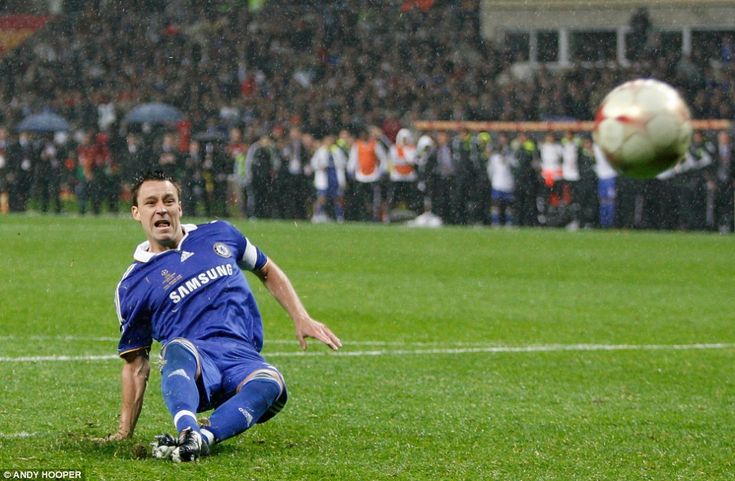
John Terry slipped, 2008

  • In the 2008 UEFA Champions League final, Chelsea captain John Terry slipped during the penalty shootout and missed what could have been the winning kick. Chelsea eventually lost to Manchester United, and the moment became one of the most heartbreaking scenes in football history.

Quote

  • The system is not broken. It was built this way.

Dispersed by Fate: Why We All Left Home

Late at night, the train pulls away from the small town station. The lights of the streets blur in the window, quietly receding into the distance. Those with backpacks don’t look back—not because they don’t care, but because departure has become too familiar, too inevitable.

We all leave. From villages, counties, even second-tier cities—we set out toward places that are bigger, faster, more uncertain. At first, we called it “seeking a better life.” Later, we stopped calling it anything. It just became the way things are.


I. Mobility for All Classes, but Not Quite Voluntary

There was a time when “migrant worker” referred only to laborers from rural areas. Today, whether you’re a factory worker or a white-collar employee, almost everyone is working away from home. The names of the jobs differ, but the logic of displacement remains the same.

Cities concentrate resources, power, and possibility. Regions outside these hubs grow increasingly marginal, slowly losing their legitimacy as places to “stay.” In such a structure, people have little real freedom of choice. Staying means giving up opportunities; leaving means paying the price in fractured relationships and emotional detachment.


II. The Erosion of Familiarity: Disconnected from People and Place

Leaving home is not just about geographic distance—it’s about losing an entire sensory map of life.

The snack stalls after school, the alleyways frozen in winter, the riverbank stones of childhood—all fade into static background noise once we leave. Urban life gradually strips away that deep sense of place, replacing it with uniform spaces that feel more functional than familiar.

Meanwhile, childhood friends scatter across the country. Group chats go silent. It’s not that friendships fade, but that life places us on separate tracks, each speeding away from the center.

Sometimes, scrolling through old contact lists, we realize: it’s been a long time since we last saw the people who mattered most.


III. Scarce Time for Family, Not from Forgetting but from Force

Life in the city is busy. Calendars are filled with meetings, deadlines, goals, and metrics. It’s not that we don’t want to spend time with our parents—it’s just that time itself becomes a luxury.

We return home maybe twice a year, staying for just a few days. Those brief reunions feel warm but fleeting—like sunlight filtered through a train window. Not exactly a “missed” relationship, but one too brief to feel complete.


IV. The Narrowing Path: Fading Dreams of Social Mobility

Many leave their hometowns in search of “upward mobility.” University degrees, corporate jobs, the hope of a better future. But reality is more complicated.

People work overtime while dodging rising rents. They chase promotions while drifting further from emotional anchors. The city doesn’t embrace them; it merely uses them.

What we call “career development” often becomes a way of compensating for lost safety. What we call “opportunity” starts to resemble a price tag: time, energy, relationships.


V. It Didn’t Have to Be This Way—But It Is

In theory, better regional development and public infrastructure could ease this structural drift. But real-world systems are slow to change. The city’s pull is built on imbalance. That’s what makes leaving seem inevitable.

So we go. Not because we want to, but because the alternatives feel even smaller.

And somewhere deep down, we know: this isn’t the life we hoped for—it’s the one we were cornered into. Sensible, but hollow. Realistic, but far from joyful.


Conclusion

The streets we knew become postcards. The friends we grew up with become profile pictures. We went far, yet still don’t know if we can ever go “back”—not just geographically, but emotionally.

This generation left home and became rootless in skyscrapers.
We pursued something “better,” but lost something complete.

Someday, we may ask:

Is there a way to live without abandoning what’s familiar?
Without severing our old ties?
Without spending a lifetime brushing past those we love?

The city won’t answer.

But still, the wind blows.

Picture

Fernando Torres' farewell match at Atlético Madrid, 2018

  • On May 20, 2018, in the final matchday of La Liga, Atlético Madrid drew 2–2 at home against Eibar. It was Fernando Torres’ farewell game for the club, and he marked the occasion with a brilliant brace to bring his Atlético journey to a perfect close.

Quote

  • Man is born free, and everywhere he is in chains.