Why Financial Freedom Is Unattainable for Most People

I. Structural Disadvantage: Wealth Flows from the Many to the Few

  1. Wealth Accumulation Relies on the Labor of Others
    Whether running a company, becoming a social media influencer, or innovating new products, the accumulation of wealth fundamentally depends on leveraging the labor or attention of others. Wealth concentrates in the hands of a few by continuously extracting value from the work of the majority.

  2. All Profits Ultimately Come from Ordinary People
    Even when someone “beats the rich” in a transaction, the wealthy derive their profits from a broad social base—consumers, employees, and public participation. In other words, “beating the rich” still means extracting value from the public, indirectly if not directly.

  3. Institutions Control Information; Retail Investors Are Disadvantaged
    Financial institutions function like ruling elites: they control media narratives and access to information. Retail investors, fragmented and unorganized, suffer from severe informational asymmetry and lack the ability to resist systematic manipulation. This inherent structural inequality ensures most individuals remain on the losing side.


II. Double Disadvantage in Capital and Cognition: Ordinary People Cannot Afford to Lose

  1. Limited Capital, Low Risk Tolerance
    Most individuals lack spare capital. Without a financial buffer, a single mistake can erase all prior gains. Unlike institutions, ordinary people cannot afford to lose multiple times before succeeding.

  2. Lack of Knowledge Leads to Blind Investment
    Many enter the market during bull runs, buying high and refusing to sell in time. Driven by greed and crowd psychology, they become “bag holders.” The absence of risk awareness and exit strategies is a key reason for losses.

  3. Leverage Amplifies Fragility
    Investing with borrowed money increases exposure. When losses occur, the impact extends beyond portfolios and into daily life, leading to heightened anxiety and long-term instability.


III. The Probability Trap of Investing: Not Steady Growth, But Disguised Gambling

  1. High Returns Come with High Risk
    Seeing a few success stories, people assume they can replicate them. In reality, these are rare outcomes with low probability—essentially high-risk bets, not sustainable strategies.

  2. Martingale Mindset Magnifies Losses
    The belief that one can double down to recover losses—commonly known as the Martingale strategy—is a dangerous fallacy. A single misstep can wipe out all capital.

  3. Steady Gains Offer Little Real Impact for Most
    Even when modest and stable growth is achieved, the returns are often negligible compared to life’s rising expenses. For most, it does not enable upward mobility or change life’s trajectory meaningfully.


IV. Conclusion & Recommendations: Ordinary People Are Positioned to Be “Harvested”

In this system, the average person is structurally and behaviorally predisposed to lose:

  • Structurally disadvantaged due to lack of voice and asymmetric information;
  • Resource-deficient in terms of capital, time, and risk tolerance;
  • Behaviorally prone to common traps—chasing highs, greed, and herd mentality;
  • Positioned as “yield providers” for the few who extract consistent gains.

Recommendations:

  • Avoid chasing trends, control greed, and exit at the right time;
  • Understand probability—stop fantasizing about getting rich overnight;
  • Focus on improving quality of life instead of chasing the illusion of “financial freedom.”

Picture
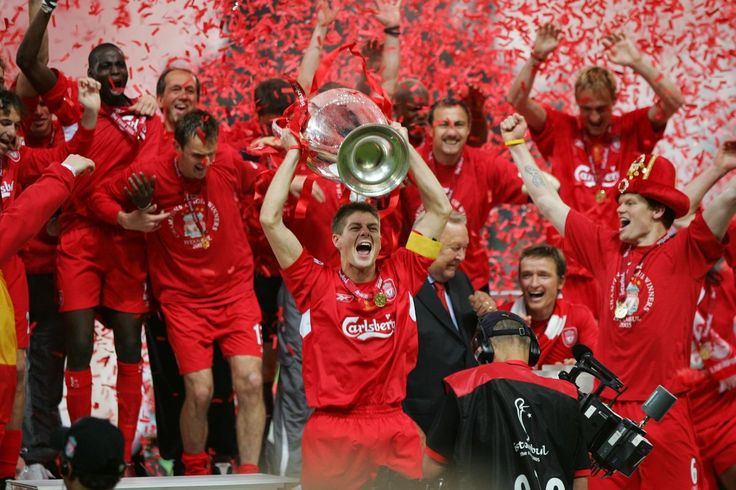
Liverpool staged the “Miracle of Istanbul”, 2005

  • On May 25, 2005, at the Atatürk Olympic Stadium in Istanbul, Liverpool staged the “Miracle of Istanbul” in the UEFA Champions League final: coming back from a 0-3 deficit to draw level, and ultimately defeating AC Milan in a penalty shootout to claim their fifth European Cup title.

Quote

  • Hope is the opium of the people.

In a time of economic downturn and constant layoffs, why did I foolishly give up a high-paying job?

Steve Jobs delivered a renowned speech at Stanford University’s graduation ceremony, where he said: “You can’t connect the dots looking forward; you can only connect them looking backwards. So you have to trust that the dots will somehow connect in your future. You have to trust in something - your gut, destiny, life, karma, whatever. This approach has never let me down, and it has made all the difference in my life.”


Key Points

  • Exploring life’s possibilities
  • Fatigue from meaningless work
  • No immediate financial pressures

Introduction

  • Regarding “high salary”: While my base salary before leaving wasn’t particularly high compared to top-tier levels, when factoring in recent bonuses and the potential future value of stock options, my annual earnings exceeded 800,000 RMB. In my view, this qualifies as a high salary, though opinions may vary.

  • Regarding “foolish”: Before leaving, I worked at a large, profitable publicly listed company. Although my title was just that of a regular engineer, I led a small team in a dotted-line capacity. My day-to-day involved coding, along with some technical design and code review responsibilities. Given my familiarity with the business and my past strong performance, I felt secure from layoffs unless there were major upheavals in the company. I believed I could last at least another year or two.

Why I Decided to Leave

1. Lack of Fulfillment and Value in My Work

  • Have you read the book “Bullshit Jobs”? I found that my job fit that description perfectly. Ineffective overtime, meaningless tasks, and a lack of personal growth, combined with the subtle and complex dynamics of workplace relationships, left me feeling frustrated. Recently, I came across a quote that resonated with me: “We work to become, not to acquire.”

  • I grew weary of the pointless grind. While some excel at time and energy management, I realized it was best for me to leave at the right moment.

2. Stagnation in Income and Position

  • Despite consistently high performance ratings, I found myself unable to progress further, due to both subjective and objective reasons.
  • Perhaps my own high expectations led to feelings of dissatisfaction.

3. Embracing Change Early

  • In recent years, many talented engineers have faced layoffs, including those more skilled than myself. I realized that my own layoff was inevitable. Given my growing discontent with my current job, I thought it wiser to seek new opportunities sooner rather than later.

  • While I hadn’t yet mapped out my post-departure plans, I felt a mix of confusion and anxiety. Considering my mental and physical health, along with my innate sense of adventure, I made this choice.

4. Minimizing Impact on My Team

  • Having lost enthusiasm for my work, I met daily business requirements but lacked any extra output. To minimize the impact on my team’s year-end performance, I felt that leaving mid-year would be beneficial for everyone.

Why I’m Not Worried About the Negative Effects of Leaving

1. No immediate financial pressures

  • After a decade of work, I’ve built up a solid financial cushion. Although I currently don’t have other sources of income, I’m not overly worried about finances in the short term; I believe I can get by for a year or two.

2. A Broader Perspective

  • The current job market is overly sensitive to gaps in employment. I believe such gaps shouldn’t be seen as disadvantages but rather as opportunities for growth. Life is long, and taking time off at the right moment can foster personal development. In most cases, I don’t think a gap will significantly hinder re-entering the workforce.Certainly, the current situation may stem from the fact that many workplaces do not necessarily need exceptional individuals; they simply require obedient workers who focus on their tasks like tools. Those in charge may view employees without work gaps as mediocre candidates for layoffs, and they might even think that such individuals are less compliant, harder to control, and not the type to dutifully endure long hours without complaint.

  • Looking at this period from a future perspective, I’m willing to consider what seems like an irrational choice now could be the right one. Of course, it might also be wrong, but I’m ready to accept that risk.

  • Work can sometimes serve as an escape from life. Many people resist change and lack the energy to reflect on it, drifting through life and overlooking important issues. I often wonder what I would do if I weren’t under financial pressure. At this point, I wouldn’t choose to maintain the status quo. In the long run, money is just a number; it’s quite sad to spend years earning it for things we don’t enjoy without daring to let go. As I age, I find myself reevaluating the meaning of life, health, and the loss of loved ones.

3. Rejecting the Notion That Money Equals Success

  • In today’s restless society, this is true worldwide. Those who make money are considered successful. Yet, when I reflect on this time, I realize that aside from acquiring wealth, I have wasted many moments. Most importantly, the majority of us will never achieve financial freedom.

  • Pursue the needs of your heart. As long as you live according to your inner desires, even if you are not wealthy, you should still be considered successful. Of course, pursuing these desires doesn’t guarantee achievement, but at this point in my life, I am willing to try again and make some adjustments.

My Departure Process

  • After the first quarter of this year, I subtly hinted to my manager about my intentions to leave. We both viewed it as a rare and honest conversation. The subsequent layoffs in the second quarter felt like an unspoken agreement.

  • For the leader, it was an opportunity to replace a team member who was not fully aligned with the team. For me, it was akin to receiving an early year-end bonus when leaving.

  • I plan to share more details about my departure process in the future, including insights on layoffs and legal considerations.

Looking Ahead

  • I currently do not plan to look for a job, as there are some things I want to take this opportunity to try. Of course, it may not be successful, but I won’t elaborate on that for now.

  • Will I regret this bold move? It’s possible. But if I hadn’t taken this leap, I might one day look back and wonder if I could have achieved something great by leaving sooner. Perhaps the company’s stock will soar, and I’ll question my decision even more.

  • If I do return to the workforce, I might have to accept a lower salary.

  • Regarding my future, there are likely several possibilities:

    1. Complete unemployment, regretting my choice.
    2. A lower-paying job that may allow me to pursue my interests.
    3. Freelancing, taking on smaller projects.
    4. A complete career change, finding success or mediocrity in another industry.
    5. Other options.

Picture

Vincent Kompany's Screamer, 2019

  • Don’t shoot, No, Vinny, no!
  • The 70th minute of the Manchester City vs. Leicester City match in the 37th round of the 2018-2019 Premier League season

Quote

  • Stop being who you were and become who you are.