Between Life and Death: Reflections on Suicide, Euthanasia, and Human Dignity
“If you’re not afraid of suicide, why be afraid of living?”
At first glance, this sounds like a bold, world-weary declaration of courage. Yet, upon deeper reflection, the statement reveals a glaring logical flaw. It misunderstands pain, mocks psychological struggle, and mislabels despair as bravery. In certain corners of online culture, such words are even misused or joked about, creating a dangerous atmosphere where death is framed as a rational choice, while survival is seen as weakness or evasion.
But true courage has never been about “not fearing death.” Real courage lies in choosing to live on, even in the midst of fear and suffering.
1. Suicide is Not “Fearless of Death,” But “Afraid of Living”
The problem with the phrase “If you’re not afraid of suicide, why be afraid of living?” lies in its confusion of suffering with courage. It assumes that death is the ultimate act, and therefore “daring to die” proves a stronger ability to “dare to live.” The reality is the opposite—suicide is rarely an act of fearlessness, but almost always a response to overwhelming pain and despair. It is surrender, not challenge; collapse, not liberation.
From a psychological perspective, suicide often occurs in situations such as:
- Depression and mental illness: patients trapped in hopelessness view death as their only “relief”;
- Chronic trauma and isolation: life without support feels like a bottomless void;
- Sudden traumatic events: the death of loved ones, financial collapse, or heartbreak becomes the last straw;
- Impulsive breakdowns: some suicides are not long planned, but rather irreversible acts in moments of emotional overload.
None of these reflect genuine “courage in the face of death.” On the contrary, they reveal a painful truth: it is not death that is most terrifying, but life itself. To say “If you’re not afraid of suicide, why be afraid of living?” is as absurd as telling a drowning person: “Since you dared to jump into the water, why can’t you swim?”
2. Emotional Exploitation and a Cultural Crisis
The popularity of such sayings exposes society’s ignorance and indifference toward mental health. On the surface, the phrase looks like encouragement; in reality, it exploits others’ pain to comfort ordinary lives. Those who speak this way often live within emotional safety, far removed from the shadow of death. Unable to grasp what it means to feel exhausted by simply opening one’s eyes, they still urge others to “be strong” with a hollow slogan.
The greater danger lies in how such discourse may distort the minds of vulnerable youth in crisis. Some may begin to wonder: “Should I prove my courage to live by dying?” Such warped reasoning only deepens despair and discourages help-seeking.
3. Euthanasia and the Boundary of Rational Death
Unlike suicide, which is often impulsive or emotionally driven, euthanasia is usually a deliberate and considered decision, carried out within medical and legal frameworks. At its core lies the principle of dying with dignity.
“Dying with dignity” does not mean desiring death for its own sake, but rather preserving the right to end unbearable suffering when life can no longer continue. For example, patients with terminal cancer, ALS, or multiple organ failure may lose all basic bodily functions, living only through machines. In such conditions, “living” may no longer carry human meaning, but only mechanical existence.
If medicine and law confirm the patient’s wish, choosing to die with dignity is not escapism, but the deepest respect for personal will.
4. The Strength of Choosing Life Amid Suffering
Philosopher Viktor Frankl, in Man’s Search for Meaning, wrote that human greatness lies not in conquering the world, but in finding meaning even in extreme suffering.
The truly admirable are not those who “fear nothing, not even death,” but those who, despite depression, loneliness, or devastating setbacks, still find a way to keep living. Their persistence—negotiating with pain, seeking fragments of meaning—deserves far more respect than the false courage of “daring to die.”
5. Why Society Must Value “Living with Dignity” More Than “Dying with Dignity”
“Dying with dignity” is a rational response to death, but more urgent is the question of how to ensure people “live with dignity.” A civilized society should not only care about how people die, but more importantly, how people live.
To “live with dignity” means:
- Depressed individuals can access treatment without stigma;
- The lonely have safe spaces to speak and be heard;
- Those in financial or family crises receive respect and support.
Only when living itself is not suffused with oppression will death no longer appear to be the only way out.
Conclusion: The Philosophy of Life and Death as Social Responsibility
The phrase “If you’re not afraid of suicide, why be afraid of living?” thrives on misunderstanding suffering, misrepresenting courage, and trivializing death. But death is never a statement. Suicide should never serve as proof. And euthanasia, when chosen, should be an act of reason, not escape.
Life is a journey where every step deserves respect. The essence of philosophy is not to belittle death, but to find reasons to live even in the darkest hours.
Understanding those who commit suicide does not mean agreeing with their choice. Their actions may be the result of inadequate support or an inability to rescue themselves. Their suffering is real, and their decisions are, to some extent, understandable. But instead of letting death act as “nature’s filter,” society bears the responsibility to create a world where their pain can be heard, and their hope sustained.
Picture
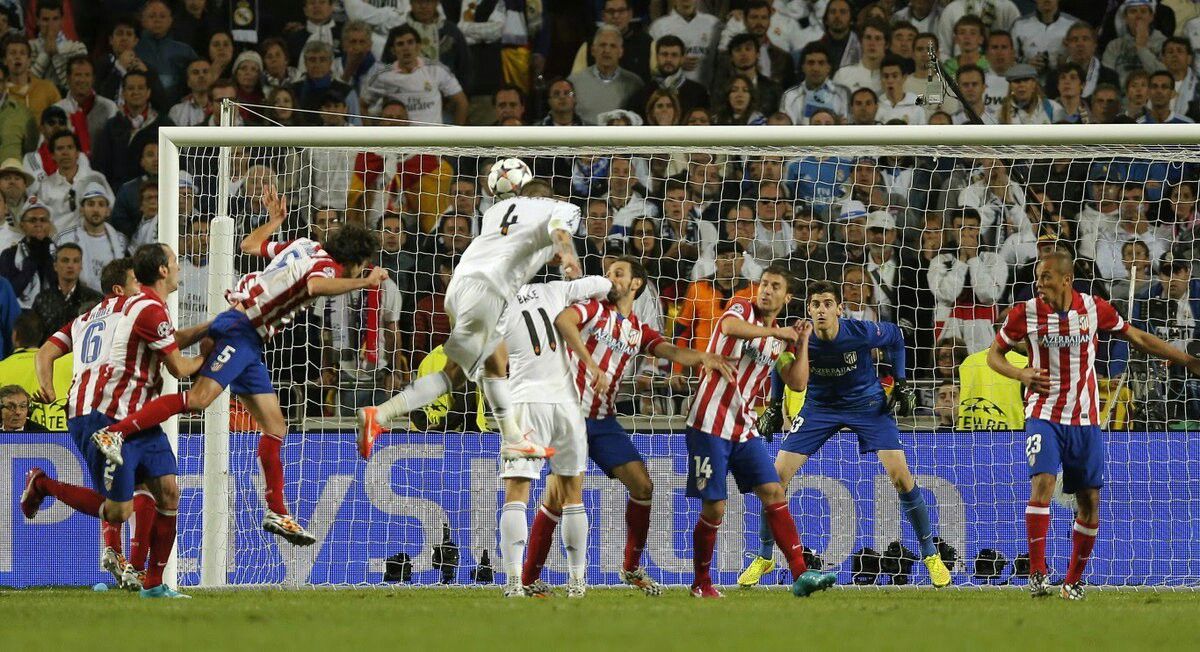
- On May 24, 2014, at the Estádio da Luz in Lisbon, Real Madrid’s No. 4 Sergio Ramos scored a header in the 93rd minute to level the Champions League final, changing the course of the match. Real Madrid went on to defeat Atlético Madrid in extra time and claimed their 10th European Cup, La Décima.
Quote
- He who has a why to live can bear almost any how.