When Did We Start Seeing Life Again Amid Our Career Hustle?

After years of intense striving and being consumed by anxiety, many of us come to a sudden realization:
We haven’t truly lived in a long time.

Someone once said:
“These past few years, work was so busy that I didn’t have the energy to take photos, let alone record anything. Now that I’m older and my career has plateaued, I’ve finally started documenting life again. Maybe it’s compromise, or maybe it’s reconciliation with myself.”

This sentiment isn’t rare—it’s a shared awakening for many in the middle chapters of life.
Shifting from career obsession to noticing life’s details isn’t a sign of defeat, but rather an internal loosening, a transition from anxiety to clarity.


1. From “Chasing Career” to “Recording Life”: A Shift in Mindset

In our youth, time felt like a scarce resource. Every minute had to be used for “progress” or “proving ourselves.”
Things like taking photos, going for walks, daydreaming, or journaling were dismissed as “wasting time.”

But as we mature and our careers stabilize—or when we realize this might be as far as it goes—we finally allow ourselves to slow down and look back at our own lives.
This isn’t compromise. It’s awakening.

Documenting life isn’t a consolation prize for failure—it’s an invitation to meet your true self.


2. Experiencing Life Isn’t Opposed to Ambition—It’s a Matter of Balance

Many people believe that pursuing a career and enjoying life are mutually exclusive—that pouring yourself into work means sacrificing quality of life, and savoring life means giving up ambition.
This is a misleading zero-sum mindset.

In truth, the two aren’t in conflict. The conflict lies in our unbalanced mental state when we’re running too fast.

  • It’s not the scenery that distracts the runner—it’s the runner who forgets to look;
  • It’s not effort that strips away our sensitivity—it’s anxiety redefining what effort means.

In other words, you absolutely can chase dreams passionately and live attentively at the same time.
You can be scribbling away late at night and still capture the golden light of dusk in a photo.
You can listen to work podcasts on your commute and still allow yourself a few minutes to daydream.

Career is part of life. Experience is its texture. You don’t need to sacrifice one for the other.


3. The Meaning of Recording: Turning Process into Presence

Recording life isn’t about showing off or gaining attention.
It’s a way to respond to yourself.
It’s a gentle reminder: You existed—authentically—on this earth.

Beyond memory, it brings deeper meanings:

  • Regaining control – When you can’t control your career highs and lows, you can still choose what to capture and how to interpret each day.
  • Enhancing presence – Even a ray of light, a cup of tea, or a short evening walk becomes real and meaningful once it’s recorded.
  • Comfort for your future self – In tough times, flipping through fragments of past moments reminds you that you were achieving something—you just moved too fast to notice.

4. A Message to You: Slowing Down Isn’t Failure

“That’s just how my career turned out” — this phrase may sound resigned, but it holds wisdom too:
You’ve finally stopped using anxiety as your sole source of momentum.

You’ve learned to set boundaries, to know when to pause and when to take care of yourself.
This isn’t passivity—it’s a mature way of cherishing the present.

Stop chasing “not good enough.”
You’re already doing well.


5. You’re Not Recording for Others, But for the You Who Was Overlooked

Many resist documenting their lives because they feel it’s too plain or worry others will think they’re showing off.
But what really matters is:
Can you find strength or comfort in these fragments?

Recording is a form of self-healing.
It’s a tender way of saying to yourself:
“You’ve come this far, and even if no one sees it, I do—and I’ll remember it.”


In Summary

Life’s constant rush once made us forget how to live.
But recording helps us reconnect with ourselves.
It’s not a reluctant compromise—it’s a conscious, mature choice.

Career and life experience have never been enemies.
If you’re willing to shift your mindset—bringing your ability to feel back into the everyday and letting your real self set the pace—
Life can still be gentle, rich, and full of strength.

You don’t start recording because life suddenly got better.
You start because you finally decided to treat it—and yourself—with softness.


Picture
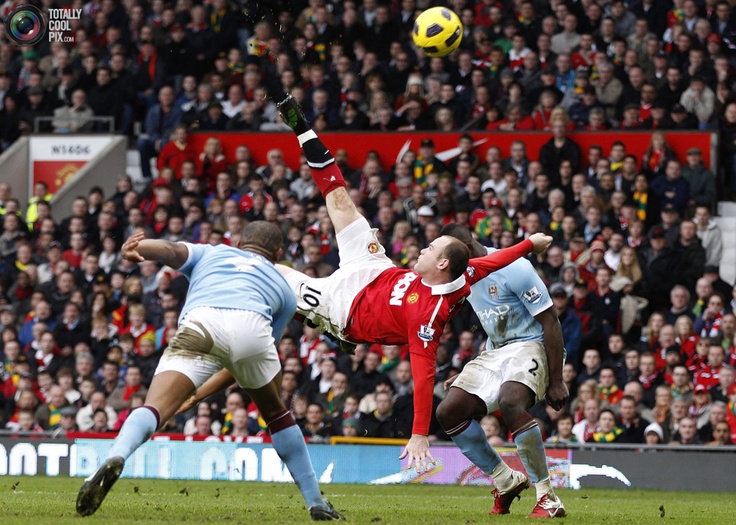
Wayne Rooney scored a stunning overhead kick against Manchester City, 2011

  • On February 12, 2011, Manchester United’s Wayne Rooney scored a stunning overhead kick against Manchester City at Old Trafford, widely regarded as one of the greatest goals in Premier League history.

Quote

  • We write to taste life twice, in the moment and in retrospect.

Meaningless Exhaustion: How a Society Falls into Consumptive Competition

On this land, at once familiar and alien, people have long since learned how to run—yet forgotten why they ever started.

College entrance exams, job hunts, endless overtime, a flood of certificates and qualifications… these are the daily rhythms of our lives, collectively known as “involution.” On the surface, they seem to measure competence, but in truth, they drain individual energy. More cruelly, they consume not only time and physical strength, but also one’s passion for life and impulse to create.

The term “consumptive competition” is neither elegant nor noble. It lacks the halo of “striving” and “ambition,” and instead sounds dim, even bleak. It doesn’t describe the opening of upward mobility, but the spread of survival anxiety; not a necessary path to an ideal society, but a systemic trap into which we’ve collectively fallen.

This form of competition is the maintenance of an illusion. Like someone standing up in a movie theater to see better—forcing those behind to stand too—eventually everyone is standing, yet no one sees any farther. The unequal distribution of resources and the scarcity of upward paths compel individuals to prove themselves “worthy of selection” through increasingly intense, formalized competition. But this process of proof creates no new value. It only repeats, mimics, dissipates—grinding down people’s potential and willpower, round after round.

This isn’t the fault of individuals. No one is born loving involution, just as no one longs to be trapped on a treadmill. The problem lies in a system obsessed with metrics, fixated on quantifiable performance, and addicted to “stable outcomes.” Thus, education becomes a testing machine, work becomes a pile of assessments, time is filled to the brim—while the soul is gradually hollowed out.

Some say this is a helpless choice, the inevitable road of the times. But is it really? True creation and progress have never come from uniform conformity, but from those willing to explore possibilities amid chaos. Yet these are the very people most easily eliminated in today’s social climate. Because they do not follow the “standard process,” they lack quantifiable achievements and are thus deemed “unqualified” by the system.

Our whole society resembles a machine running on faulty instructions—spinning rapidly, but going nowhere. We’re exhausted, dragged along by one another, yet powerless to stop. If you don’t join the race, you fall behind. If you try to step away, you find yourself surrounded by walls—engraved with words like “reality,” “responsibility,” and “survival.”

This is not just a systemic trap—it’s the collapse of collective will. We no longer believe that real value comes from creation and collaboration. Instead, we’ve come to accept that all effort must manifest through competition. Everything can be replaced, except one thing: your willingness to endure more, to grind harder—even if that very will is slowly destroying you.

And if there is tragedy in this, it’s that even after recognizing its meaninglessness, we still have no choice but to continue.

Have you ever heard the subway at 2 a.m.?
It doesn’t belong to dreams, nor to passion.
It belongs only to those who dare not stop.


Picture

John Terry slipped, 2008

  • In the 2008 UEFA Champions League final, Chelsea captain John Terry slipped during the penalty shootout and missed what could have been the winning kick. Chelsea eventually lost to Manchester United, and the moment became one of the most heartbreaking scenes in football history.

Quote

  • The system is not broken. It was built this way.

Dispersed by Fate: Why We All Left Home

Late at night, the train pulls away from the small town station. The lights of the streets blur in the window, quietly receding into the distance. Those with backpacks don’t look back—not because they don’t care, but because departure has become too familiar, too inevitable.

We all leave. From villages, counties, even second-tier cities—we set out toward places that are bigger, faster, more uncertain. At first, we called it “seeking a better life.” Later, we stopped calling it anything. It just became the way things are.


I. Mobility for All Classes, but Not Quite Voluntary

There was a time when “migrant worker” referred only to laborers from rural areas. Today, whether you’re a factory worker or a white-collar employee, almost everyone is working away from home. The names of the jobs differ, but the logic of displacement remains the same.

Cities concentrate resources, power, and possibility. Regions outside these hubs grow increasingly marginal, slowly losing their legitimacy as places to “stay.” In such a structure, people have little real freedom of choice. Staying means giving up opportunities; leaving means paying the price in fractured relationships and emotional detachment.


II. The Erosion of Familiarity: Disconnected from People and Place

Leaving home is not just about geographic distance—it’s about losing an entire sensory map of life.

The snack stalls after school, the alleyways frozen in winter, the riverbank stones of childhood—all fade into static background noise once we leave. Urban life gradually strips away that deep sense of place, replacing it with uniform spaces that feel more functional than familiar.

Meanwhile, childhood friends scatter across the country. Group chats go silent. It’s not that friendships fade, but that life places us on separate tracks, each speeding away from the center.

Sometimes, scrolling through old contact lists, we realize: it’s been a long time since we last saw the people who mattered most.


III. Scarce Time for Family, Not from Forgetting but from Force

Life in the city is busy. Calendars are filled with meetings, deadlines, goals, and metrics. It’s not that we don’t want to spend time with our parents—it’s just that time itself becomes a luxury.

We return home maybe twice a year, staying for just a few days. Those brief reunions feel warm but fleeting—like sunlight filtered through a train window. Not exactly a “missed” relationship, but one too brief to feel complete.


IV. The Narrowing Path: Fading Dreams of Social Mobility

Many leave their hometowns in search of “upward mobility.” University degrees, corporate jobs, the hope of a better future. But reality is more complicated.

People work overtime while dodging rising rents. They chase promotions while drifting further from emotional anchors. The city doesn’t embrace them; it merely uses them.

What we call “career development” often becomes a way of compensating for lost safety. What we call “opportunity” starts to resemble a price tag: time, energy, relationships.


V. It Didn’t Have to Be This Way—But It Is

In theory, better regional development and public infrastructure could ease this structural drift. But real-world systems are slow to change. The city’s pull is built on imbalance. That’s what makes leaving seem inevitable.

So we go. Not because we want to, but because the alternatives feel even smaller.

And somewhere deep down, we know: this isn’t the life we hoped for—it’s the one we were cornered into. Sensible, but hollow. Realistic, but far from joyful.


Conclusion

The streets we knew become postcards. The friends we grew up with become profile pictures. We went far, yet still don’t know if we can ever go “back”—not just geographically, but emotionally.

This generation left home and became rootless in skyscrapers.
We pursued something “better,” but lost something complete.

Someday, we may ask:

Is there a way to live without abandoning what’s familiar?
Without severing our old ties?
Without spending a lifetime brushing past those we love?

The city won’t answer.

But still, the wind blows.

Picture

Fernando Torres' farewell match at Atlético Madrid, 2018

  • On May 20, 2018, in the final matchday of La Liga, Atlético Madrid drew 2–2 at home against Eibar. It was Fernando Torres’ farewell game for the club, and he marked the occasion with a brilliant brace to bring his Atlético journey to a perfect close.

Quote

  • Man is born free, and everywhere he is in chains.

A Rational Analysis of the “Power–Humiliation” Mechanism in the Workplace

A Rational Analysis of the “Power–Humiliation” Mechanism in the Workplace

In modern workplaces, organizational structure and power dynamics exert significant influence over employee behavior. While management styles vary across industries and companies, in some highly hierarchical organizations, a distinct “power–humiliation” mechanism can be observed. This mechanism is not necessarily a reflection of individual moral failings, but rather a product of systemic pressures and structural incentives. The following offers a rational analysis of these workplace phenomena.

1. The Behavior Pattern of Pleasing Upward and Pressuring Downward

In certain organizational cultures, some employees adopt a strategy of pleasing superiors to gain favor, job security, or promotion opportunities. This may involve taking on excessive workloads, excessive flattery, or tolerating unreasonable demands. Simultaneously, these individuals may assert dominance over subordinates or peers to reinforce their own position. While this behavior may be seen as a pragmatic survival tactic, it often contributes to hierarchical rigidity and deteriorating trust within teams.

2. Rationalizing Harmful Actions as “Just Doing My Job”

When employees are tasked with ethically questionable duties—such as overworking subordinates, concealing information, or enabling non-transparent practices—they may adopt a mindset of “I’m just following orders” or “it’s what the company requires.” This rationalization helps reduce cognitive dissonance and shift responsibility upward. However, over time, this diffusion of accountability may erode ethical standards and organizational integrity.

3. Internalization and Replication of a Humiliation Culture

In some environments, humiliation-based management practices—such as public criticism, personal belittlement, or the denial of individual effort—are not isolated incidents but embedded norms. Employees subjected to such treatment over time may internalize it as normal, and eventually replicate the same behaviors once they ascend into managerial roles. This transition from “victim” to “perpetrator” reinforces a cycle that makes positive cultural change difficult.

4. Top-Down Pressure in Pyramid-Like Structures

Many organizations operate under a strictly hierarchical, top-down structure. Middle managers, situated between executive leadership and front-line staff, often bear the burden of translating high-level goals into concrete actions. To maintain favor with upper management, they may intensify pressure on their teams, leading to a “pressure cascade” that can result in burnout, dissatisfaction, and high turnover at the bottom levels of the organization.

5. Humiliating Others to Reinforce One’s Own Position

In competitive and resource-constrained workplaces, some mid- or high-level employees may adopt a defensive posture by criticizing or suppressing others. This behavior often stems from job insecurity and the fear of being excluded from decision-making circles. By diminishing others, they attempt to reaffirm their relevance and demonstrate continued alignment with upper management. This is a psychological defense mechanism, not merely an expression of authority.

Conclusion

These workplace phenomena illustrate how power and humiliation can become deeply intertwined in certain organizational cultures. While such mechanisms may appear to support efficiency and control on the surface, their deeper effects involve fear, alienation, and psychological strain.


Picture

Cristiano Ronaldo, header, Champions League, Roma, 2008

  • On April 1, 2008, during the first leg of the Champions League quarter-finals, Manchester United’s Cristiano Ronaldo rose high to score a header against Roma at the Stadio Olimpico. United won the match 2-0 away from home.

Quote

  • The only thing necessary for the triumph of evil is for good men to do nothing.

The Corporate Zoo

In a tropical rainforest of technology, constructed from glass curtain walls and slogan banners, lived a group of peculiar creatures. They were known as “Efficiency Animals,” bred to generate virtual value for the “Vision Farm.” They had no names, only IDs: Developer Ape 101, Operations Goose 203, Design Fox 309, Data Bear 417…

Their daily ritual began at 9 a.m. and ended at midnight. They inhabited an ecosystem rich in “bullshit tasks,” where the greatest challenge wasn’t the work itself, but pretending to be “extremely busy.”

The zoo always championed “creativity,” but in a very local form: transforming once-inspired, intellectual labor into meticulously segmented, labor-intensive time blocks. Creative writing? It was broken into “polishing,” “templating,” “client-speak alignment,” “leader pre-review,” “secondary review,” and “review meeting summary.” Every step required a timestamp, screenshot, and submission before it could be closed. What once took two hours of genuine inspiration now stretched into a full week’s “burn down chart.”

The totem of this zoo? Overpopulation. Labor overflowed. Every year, millions of interns rushed into the zoo, chasing a meal stipend and a résumé adorned with a prestigious company logo. They traded cost-effectiveness for lunch and sold their time for KPIs.

Individuality was outlawed in the zoo. Smart with opinions? Dangerous. Quiet but capable? Not team-oriented. Only the obedient, submissive, and unquestioning survived. The management handbook explicitly stated: “Avoid expressing unnecessary thoughts,” lest you disrupt the team atmosphere and shake the foundations of the sacred “grind.”

Here, a popular evolutionary trait had emerged: the “high EQ, dead-eyed smile.” Animals learned to maintain a professional grin in meetings, nodding while their souls faded. They understood that recognition came not from competence, but from “emotional management,” relentless overtime, and the sacred art of silence.

At the top of the pyramid stood a different breed. These creatures seemed to possess freedom, privilege, and halos. But in the private shadows, many knew that reaching such heights required countless sacrifices of dignity and honesty. Hypocrisy was the passport; compromise was the gate. Many had once tried to hold their principles—until they were sidelined and isolated. Eventually, they too chose the path with the brightest prospects.

“We are the vanguard of innovation! The model workers of struggle!” roared the Tiger Leader at the year-end gala, his voice echoing through the zoo via a state-of-the-art sound system. “As long as you grind hard enough, the future is yours!”

Thunderous applause followed. The efficiency animals chanted slogans in unison, as if they had truly seen the gate to freedom. But more of them knew it was just a display board reading “Hard work changes destiny,” behind which stood a wall of reinforced concrete.

One day, a newly arrived intern Chimpanzee timidly asked, “Why are we always doing such meaningless tasks?” A Squirrel colleague whispered back, “These aren’t tasks. They’re rituals of faith.”

The intern fell silent. He began to work overtime, obey orders, smile, and quickly read the room in meetings. Soon, he was fully assimilated, seamlessly integrated into the system.

But one late night, under the cold lights of the zoo, an old HR Chimpanzee—ID 000—was leaning on the rooftop, puffing on an e-cigarette. He had been among the zoo’s earliest inhabitants. Now, he was tasked with “onboarding welcome speeches.” He said, “Back then, I wanted to change the world. But the world changed me. Now, I teach young animals how to play dumb.”

He pointed toward a distant building draped with a “Tech for Good” banner and said, “See that? Every floor has lights on. They’re grinding through the night, thinking freedom waits at the top. But the rooftop’s already crowded—with people smiling, who’ve long stopped climbing or even looking down.”

“What will you do then?” the intern asked softly.

The old chimp smiled and bit into a cold steamed bun. “Wait for retirement, I guess. What else is there? Our kind—waking up won’t save us.”

At 5 a.m., the zoo’s speakers blared once more: “A new day begins—may your dreams carry you forward and your feet stay grounded.” The animals rubbed their eyes and shuffled back into their cubicles, chasing a future that never arrived.

There was no zoo. The entire society was a nationwide examination room in ecological disguise. Only the disobedient ones—the ones who still dared to think—ever noticed they were caged.

Picture

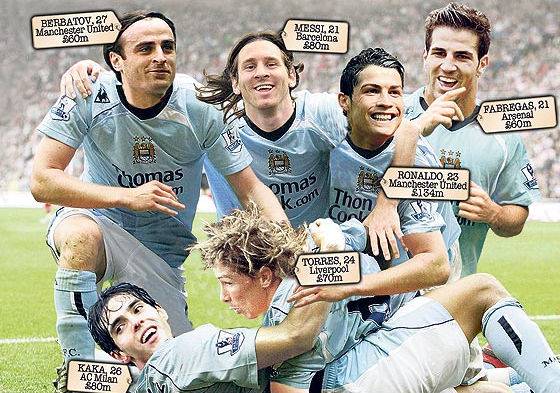
Manchester_City_Superstar_Policy

  • On September 1, 2008, after Manchester City was acquired by the Abu Dhabi United Group, the club began making high-profile signings and implemented a strategy to build a world-class team.

Quote

  • The price of fitting in is the death of the self.

Facing Layoffs: After Six Meetings, Why I Ultimately Gave Up on Pursuing 2N Compensation?

The Prevalence of Layoffs

  • In recent years, layoffs have become increasingly common, with many companies adopting the N+1 compensation scheme as a standard practice. However, some employees in the workplace sometimes take on the role of “spiritual capitalists,” believing that N+1 compensation is sufficient and viewing any further demands as greedy. In certain foreign companies, as long as they offer more than N+1, many people express gratitude and praise.
  • It’s important to note that in cases where employees are not at fault, companies must reach a mutual agreement with employees for the layoff to be considered legitimate; otherwise, it may constitute an illegal dismissal.

Reasons for Accepting N+1

  • Many individuals choose to accept N+1 compensation primarily because the costs of pursuing their rights are high, and they have limited time and energy. Going up against a collective force is undoubtedly a daunting task. While it’s possible to secure a 2N payout, that would merely be what the law entitles them to. The company doesn’t face any additional penalties, which could lead to a waste of time and energy on our part.

My Experience with Six Meetings

  • After undergoing six meetings, the company failed to identify any fault on my part. Ultimately, they issued me a “Notice of Termination of Labor Contract,” citing “significant changes in the objective circumstances under which the labor contract was established, making it impossible to fulfill the contract,” and were only willing to offer N+1 compensation. This justification was clearly unfounded, as the company is a profitable publicly traded entity that continues to advertise for the same positions on its website.
  • After consulting with two lawyers, their opinion was that the Notice of Termination of Labor Contract is likely legal and enforceable. This means that my employment relationship with the company would end according to the timeline stated in the notice. I could have taken this notice to labor arbitration to argue for unlawful dismissal and seek 2N compensation. However, I faced an awkward situation: my stock options were set to vest the following week, while the termination of my employment would occur the day before.

The Dilemma of Stock Threats

  • Equity incentives granted by publicly traded companies are usually additional forms of compensation. The company’s HR threatened to revoke my stock options, coercing me into accepting the N+1 offer. In fact, the combination of the N+1 compensation and the stock’s value exceeded the 2N payout.

Final Decision and Summary

  • From the company’s perspective, they preferred to grant me more in stock rather than allow me to receive compensation exceeding N+1, as this might encourage other employees to follow suit. They would rather see me take legal action than to directly offer me more compensation, thereby discouraging future claims from other employees.
  • After careful consideration, I ultimately decided to accept the N+1 offer, as my attempts to advocate for my rights were unsuccessful.

Final Thoughts

  • Facing the threat of unvested stock options, my feelings are mixed.
  • Lawyers did not provide much optimism regarding the possibility of reclaiming the stock.
  • It could take one to two years to secure a 2N payout, while the stock is likely unrecoverable.
  • In terms of overall value, the combination of N+1 and the stock still exceeds the 2N compensation.

Closing Questions

  • Does signing an agreement under the threat of stock revocation constitute coercion? Can it be deemed invalid? Are there any lawyers willing to take on my case?

Picture

Steven Gerrard Slip, 2014

  • 4th minute of first-half stoppage time in the match between Liverpool and Chelsea in the 36th round of the 2013-2014 Premier League season

Quote

  • Where there is no struggle, there is no strength.

In a time of economic downturn and constant layoffs, why did I foolishly give up a high-paying job?

Steve Jobs delivered a renowned speech at Stanford University’s graduation ceremony, where he said: “You can’t connect the dots looking forward; you can only connect them looking backwards. So you have to trust that the dots will somehow connect in your future. You have to trust in something - your gut, destiny, life, karma, whatever. This approach has never let me down, and it has made all the difference in my life.”


Key Points

  • Exploring life’s possibilities
  • Fatigue from meaningless work
  • No immediate financial pressures

Introduction

  • Regarding “high salary”: While my base salary before leaving wasn’t particularly high compared to top-tier levels, when factoring in recent bonuses and the potential future value of stock options, my annual earnings exceeded 800,000 RMB. In my view, this qualifies as a high salary, though opinions may vary.

  • Regarding “foolish”: Before leaving, I worked at a large, profitable publicly listed company. Although my title was just that of a regular engineer, I led a small team in a dotted-line capacity. My day-to-day involved coding, along with some technical design and code review responsibilities. Given my familiarity with the business and my past strong performance, I felt secure from layoffs unless there were major upheavals in the company. I believed I could last at least another year or two.

Why I Decided to Leave

1. Lack of Fulfillment and Value in My Work

  • Have you read the book “Bullshit Jobs”? I found that my job fit that description perfectly. Ineffective overtime, meaningless tasks, and a lack of personal growth, combined with the subtle and complex dynamics of workplace relationships, left me feeling frustrated. Recently, I came across a quote that resonated with me: “We work to become, not to acquire.”

  • I grew weary of the pointless grind. While some excel at time and energy management, I realized it was best for me to leave at the right moment.

2. Stagnation in Income and Position

  • Despite consistently high performance ratings, I found myself unable to progress further, due to both subjective and objective reasons.
  • Perhaps my own high expectations led to feelings of dissatisfaction.

3. Embracing Change Early

  • In recent years, many talented engineers have faced layoffs, including those more skilled than myself. I realized that my own layoff was inevitable. Given my growing discontent with my current job, I thought it wiser to seek new opportunities sooner rather than later.

  • While I hadn’t yet mapped out my post-departure plans, I felt a mix of confusion and anxiety. Considering my mental and physical health, along with my innate sense of adventure, I made this choice.

4. Minimizing Impact on My Team

  • Having lost enthusiasm for my work, I met daily business requirements but lacked any extra output. To minimize the impact on my team’s year-end performance, I felt that leaving mid-year would be beneficial for everyone.

Why I’m Not Worried About the Negative Effects of Leaving

1. No immediate financial pressures

  • After a decade of work, I’ve built up a solid financial cushion. Although I currently don’t have other sources of income, I’m not overly worried about finances in the short term; I believe I can get by for a year or two.

2. A Broader Perspective

  • The current job market is overly sensitive to gaps in employment. I believe such gaps shouldn’t be seen as disadvantages but rather as opportunities for growth. Life is long, and taking time off at the right moment can foster personal development. In most cases, I don’t think a gap will significantly hinder re-entering the workforce.Certainly, the current situation may stem from the fact that many workplaces do not necessarily need exceptional individuals; they simply require obedient workers who focus on their tasks like tools. Those in charge may view employees without work gaps as mediocre candidates for layoffs, and they might even think that such individuals are less compliant, harder to control, and not the type to dutifully endure long hours without complaint.

  • Looking at this period from a future perspective, I’m willing to consider what seems like an irrational choice now could be the right one. Of course, it might also be wrong, but I’m ready to accept that risk.

  • Work can sometimes serve as an escape from life. Many people resist change and lack the energy to reflect on it, drifting through life and overlooking important issues. I often wonder what I would do if I weren’t under financial pressure. At this point, I wouldn’t choose to maintain the status quo. In the long run, money is just a number; it’s quite sad to spend years earning it for things we don’t enjoy without daring to let go. As I age, I find myself reevaluating the meaning of life, health, and the loss of loved ones.

3. Rejecting the Notion That Money Equals Success

  • In today’s restless society, this is true worldwide. Those who make money are considered successful. Yet, when I reflect on this time, I realize that aside from acquiring wealth, I have wasted many moments. Most importantly, the majority of us will never achieve financial freedom.

  • Pursue the needs of your heart. As long as you live according to your inner desires, even if you are not wealthy, you should still be considered successful. Of course, pursuing these desires doesn’t guarantee achievement, but at this point in my life, I am willing to try again and make some adjustments.

My Departure Process

  • After the first quarter of this year, I subtly hinted to my manager about my intentions to leave. We both viewed it as a rare and honest conversation. The subsequent layoffs in the second quarter felt like an unspoken agreement.

  • For the leader, it was an opportunity to replace a team member who was not fully aligned with the team. For me, it was akin to receiving an early year-end bonus when leaving.

  • I plan to share more details about my departure process in the future, including insights on layoffs and legal considerations.

Looking Ahead

  • I currently do not plan to look for a job, as there are some things I want to take this opportunity to try. Of course, it may not be successful, but I won’t elaborate on that for now.

  • Will I regret this bold move? It’s possible. But if I hadn’t taken this leap, I might one day look back and wonder if I could have achieved something great by leaving sooner. Perhaps the company’s stock will soar, and I’ll question my decision even more.

  • If I do return to the workforce, I might have to accept a lower salary.

  • Regarding my future, there are likely several possibilities:

    1. Complete unemployment, regretting my choice.
    2. A lower-paying job that may allow me to pursue my interests.
    3. Freelancing, taking on smaller projects.
    4. A complete career change, finding success or mediocrity in another industry.
    5. Other options.

Picture

Vincent Kompany's Screamer, 2019

  • Don’t shoot, No, Vinny, no!
  • The 70th minute of the Manchester City vs. Leicester City match in the 37th round of the 2018-2019 Premier League season

Quote

  • Stop being who you were and become who you are.