Faith, Logic, and the Human Condition

Religion has always been humanity’s attempt to reconcile the unknown with the unbearable. Yet in its long history, what we often see is not wisdom, but a patchwork of dogmas—rigid rules stitched together under the banner of “truth.” When one looks closer, many of these doctrines resemble little more than arbitrary “arrangements of belief,” a grand combinatorial game in which each culture and era selects its own preferred permutation.

Take, for instance, the Catholic demand that priests remain celibate. On the surface, it claims to be a noble sacrifice, a spiritual devotion beyond earthly desire. But in essence, it is a denial of human nature. Sexuality, family, intimacy—these are not trivial distractions; they are part of what makes us fully human. Forcing clergy to live as if they were statues of marble, untouched by desire, produces not saints but distortions. History is littered with the consequences: hypocrisy, secret scandals, and the collapse of credibility. It is less “holiness” than a bureaucratic fantasy, as if human beings could be administratively managed into angels.

And yet, the contradiction runs deeper. If everyone were to obey such rules—if all faithful men and women renounced marriage and childbearing—then religion itself would vanish in a single generation. A community that prohibits reproduction is a community destined for extinction. In other words, the very survival of the faith depends on most believers not following its strictest ideals. The structure endures only because the masses live in ordinary, “sinful” humanity—marrying, raising children, and thus producing the next generation of worshippers. The faith lives parasitically on the disobedience of its followers.

Of course, Catholicism is hardly unique. Many religions thrive on this same paradox: preaching values impossible to live by, then glorifying the guilt and repentance that follow. By this logic, the religion does not cure the disease—it manufactures it, and then sells itself as the only medicine.

This does not mean that religion is entirely useless. Its stories, symbols, and rituals can provide meaning, comfort, and community. But we must strip away the illusion that any single doctrine holds “universal truth.” In reality, what we call “faith” is simply one configuration of human values among many. For some, it offers order; for others, suffocation.

A wiser approach is to recognize religion as a cultural toolkit: a set of symbols through which people negotiate mortality, morality, and belonging. But the danger lies in mistaking the tool for the truth, the symbol for reality. Once that happens, reason is abandoned, and the very thing meant to serve humanity begins to demand that humanity serve it.

In the end, no divine law can override human nature. What survives across cultures and centuries are not the dogmas that defy logic, but the values that harmonize with our shared humanity: compassion, justice, dignity, and love. Religions that embrace these endure; those that wage war against human essence collapse under their own contradictions.

Perhaps, then, the task for the modern age is not to abandon faith, but to see it clearly: not as a sacred command from above, but as an earthly experiment in meaning-making. And like all experiments, it is judged not by its promises, but by its results.


Picture
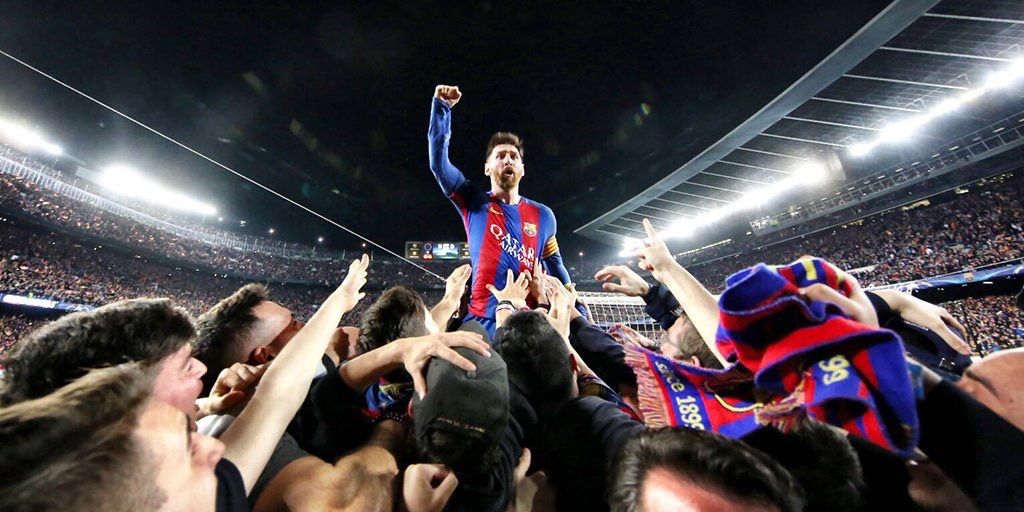
Messi stood on the advertising board with his fist raised in celebration, 2017

  • On March 8, 2017, Barcelona overturned a 4–0 first-leg deficit by beating Paris Saint-Germain 6–1 at home in the Champions League Round of 16, and after the match Messi stood on the advertising board with his fist raised in celebration, creating an iconic Champions League moment.

Quote

  • The price of freedom is eternal vigilance.
Wang Yangming's Philosophy of the Mind: Cultivating a Bright Heart, Walking a Clear Path in Life

In life, the hardest thing is to truly know yourself. The second hardest? To firmly stay true to yourself. Wang Yangming, through a life of trials and reflection, left us with a guiding philosophy for both—what he called the learning of the mind (xin xue).

He said:
“The mind is principle itself.”
“Unity of knowledge and action.”
“Extend innate knowing.”

These are not obscure terms meant only for philosophers. They are three simple truths that any ordinary person can use to navigate life and emerge from confusion.


I. “The Mind Is Principle” — Truth Is Not External, But Within You

We often believe that truth must be sought outside: in books, from sages, or from fate itself. But Wang Yangming said, “The mind is principle.”

What does that mean? It means you already know, deep down, what is right and what is wrong. You feel anger when faced with injustice, and warmth when witnessing kindness—that is principle. It is not locked away in temples or scrolls, but alive in your heart.

This is an incredibly comforting idea:
You don’t need to become some “ideal person.”
You only need to return inward and see clearly the bright and upright self that’s already there.

Your heart already knows the way.


II. “Unity of Knowledge and Action” — Knowing Is Doing

Many people understand a lot of principles, yet still live unfulfilled lives. Why? Because knowing alone is not enough.

Wang Yangming tells us, “To know but not to act is not truly to know.”

It’s like this:
You know honesty is good, yet still lie.
You know health matters, but still stay up late.
Then you don’t really know it.

True knowledge is action made flesh.
Knowing and doing are not two things—they are one.

This isn’t about perfection. It’s a reminder that every small act is part of true cultivation.


III. “Extend Innate Knowing” — Listen to the Gentle Yet Firm Voice Within

Innate knowing is your most authentic inner compass. It’s the voice that gently rebukes you when you’ve done wrong, and quietly rejoices when you’ve done right.

To “extend innate knowing” is to continually live as the person your heart already knows you should be.

You don’t need to compare yourself to others or meet their expectations. Just ask yourself:
“Is this the right thing in my heart?”
Not what benefits you.
Not what others think is right.
But what brings you peace.

To extend innate knowing is to spend your life walking toward your most genuine self.


IV. “There Is Nothing Beyond the Mind” — The World Is a Reflection of the Heart

Wang Yangming also said: “There is nothing in the world outside the mind; there is no principle outside the mind.”

The chaos of the world is often a projection of the chaos within.
You feel restless because your heart is unsettled.
You feel fear because your heart is unanchored.

But when your mind is clear, the world becomes gentle.

We can’t control the storms—but we can train the hand that steers the boat.
No matter how loud the world becomes, you can stand like a lotus in the mud—untouched—because you know:
Real strength comes from within.


V. The Philosophy of Wang Yangming: The Best Path of Cultivation in Life

Wang Yangming was not an armchair scholar. He was a man who endured exile, war, and failure. His philosophy wasn’t born from theory, but from life itself.

When you hit a low point in life, remember these three phrases:

  • “The mind is principle”: Trust your inner judgment—no need to seek outside.
  • “Unity of knowledge and action”: Don’t stop at knowing—let your actions shape your life.
  • “Extend innate knowing”: Live with integrity, and your heart will be at peace.

True cultivation is not about escaping the world, but slowly polishing your heart through everyday life.


Conclusion

The world may be vast, but the greatest challenge is still mastering your own heart.
The path may be long, but it begins with each small moment of knowing and doing.

May the wisdom of Wang Yangming help you rediscover your truest self,
and walk steadfast toward a life of clarity and light.

Picture

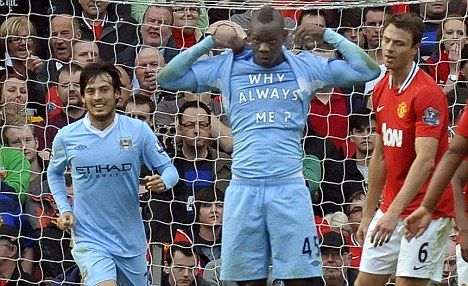
Why Always Me ?

  • On October 23, 2011, during a Premier League match between Manchester United and Manchester City, Mario Balotelli lifted his jersey after scoring to reveal the message “Why Always Me?”, mocking the media’s constant focus on his controversies and creating an iconic celebration.

Quote

  • Know thyself.

The World Is a Giant Probability System

Almost every decision and outcome in our lives is not determined by certainty, but by probability. From the tiniest personal choices to sweeping societal shifts, what happens is rarely absolute—rather, it’s governed by likelihoods. Success, failure, and everything in between can often be traced back to how we navigate and interact with probabilities.


Individual Success Doesn’t Prove Systemic Superiority

In the fields of technological innovation, scientific breakthroughs, or business achievements, we often see certain standout successes being interpreted as signs of systemic excellence. But from a probabilistic perspective, these are often “low-frequency, high-visibility” events. In other words:

Even if a system is inefficient or lacks supportive mechanisms, a remarkable success can still occasionally emerge—just by chance.

This doesn’t indicate a superior system; it’s simply the natural variance of probability. Just like a flawed garden can still produce a beautiful flower, a breakthrough may appear in a suboptimal environment. Respecting such achievements is valid—but using them as evidence of broad systemic advancement is analytically weak. A more rational approach would consider how often these successes occur, whether they are replicable, and how the talent pipeline functions.


Everyday Decisions Are Also Probabilistic

Even the decision to leave your house today involves probability. You know there’s a tiny chance you might get into an accident, but you also know there’s a much higher chance you’ll earn a living, meet people, or pursue opportunities. You’re not seeking perfect safety—you’re balancing:

  • High-probability gains (work, experience, connection)
  • Against low-probability risks (accidents or rare events)

Humans have survived and thrived not because we avoid all risk, but because we intuitively weigh risks and rewards, and move forward despite uncertainty.


Filtering Mechanisms: Using Probability to Enhance Efficiency

In hiring, admissions, or investment selection, people often set thresholds—such as academic qualifications, experience levels, or track records. While this may seem exclusionary, it’s actually a method of probabilistic optimization. For example:

Statistical patterns suggest that candidates with certain backgrounds are more likely to meet performance expectations.

It doesn’t mean others are incapable—just that the chance of success is higher within that filtered group. Given limited time and resources, decision-makers accept the risk of overlooking some exceptional individuals in order to maximize efficiency. Like an algorithmic news feed that might miss gems but still improves overall relevance, these filters are imperfect, but pragmatic.


Investment and Risk: It’s All About Probabilistic Balance

The saying “high risk, high return” is well known—but it’s only part of the truth. What really matters is the probability of achieving that high return. Many people see others get rich from speculative ventures and jump in, forgetting that:

Most of those stories are survivor bias—we see the winners, but not the countless losers.

Understanding probability in investing means:

  • Diversifying and controlling position sizes
  • Accepting failure as part of the game
  • Playing a long-term, multi-round strategy

The most dangerous investors are those who confuse luck with strategy. Rational ones treat every opportunity as a probability event, not a guarantee.


The Danger of Extrapolating from Extremes

Probability thinking is often undermined by our emotional attraction to extreme events. We love stories of dramatic success or failure and try to extract universal truths from them. But the truth is:

An extraordinary case—whether a wild success or tragic failure—doesn’t represent the whole picture.

Rational debate should rely on comprehensive data, large sample sizes, and understanding of context. Not on anecdotes or outliers. It’s intellectually lazy—and often misleading—to generalize from one data point, no matter how compelling the story.


Of Course, Sometimes Irrational Belief Has Its Place

It’s worth acknowledging that in certain scenarios, believing in the improbable can have emotional or motivational value. When someone is in a dark place, even a 1% chance can inspire hope. At the collective level, optimism—however unrealistic—can provide cohesion and momentum.

So yes, “irrational” belief has social utility. But it should be recognized for what it is: a short-term emotional tool, not a foundation for long-term planning or policymaking.


In Conclusion: Embracing Probability Is a Mark of Maturity

Those who understand probability are more accepting of uncertainty, more tolerant of failure, and less likely to swing between extremes of optimism and despair. They see success not as proof of destiny, and failure not as doom, but as part of a broader, probabilistic dance.

There are no certainties—only likelihoods, distributions, and statistical tendencies.

Strength doesn’t lie in denying randomness. It lies in understanding, navigating, and working with randomness.


Picture

Robin van Persie Volley, 2013

  • On April 22, 2013, at Old Trafford, Wayne Rooney delivered a precise long pass from midfield, and Robin van Persie met it with a stunning first-time volley to score. Manchester United eventually defeated Aston Villa 3-0 in that match, with Van Persie netting a hat-trick. This victory secured the Premier League title for the 2012–13 season — the final league championship of Sir Alex Ferguson’s managerial career at Manchester United.

Quote

  • The world is not governed by certainty, but by probability.